
Top NFL Tight Ends Career Stat Leaders
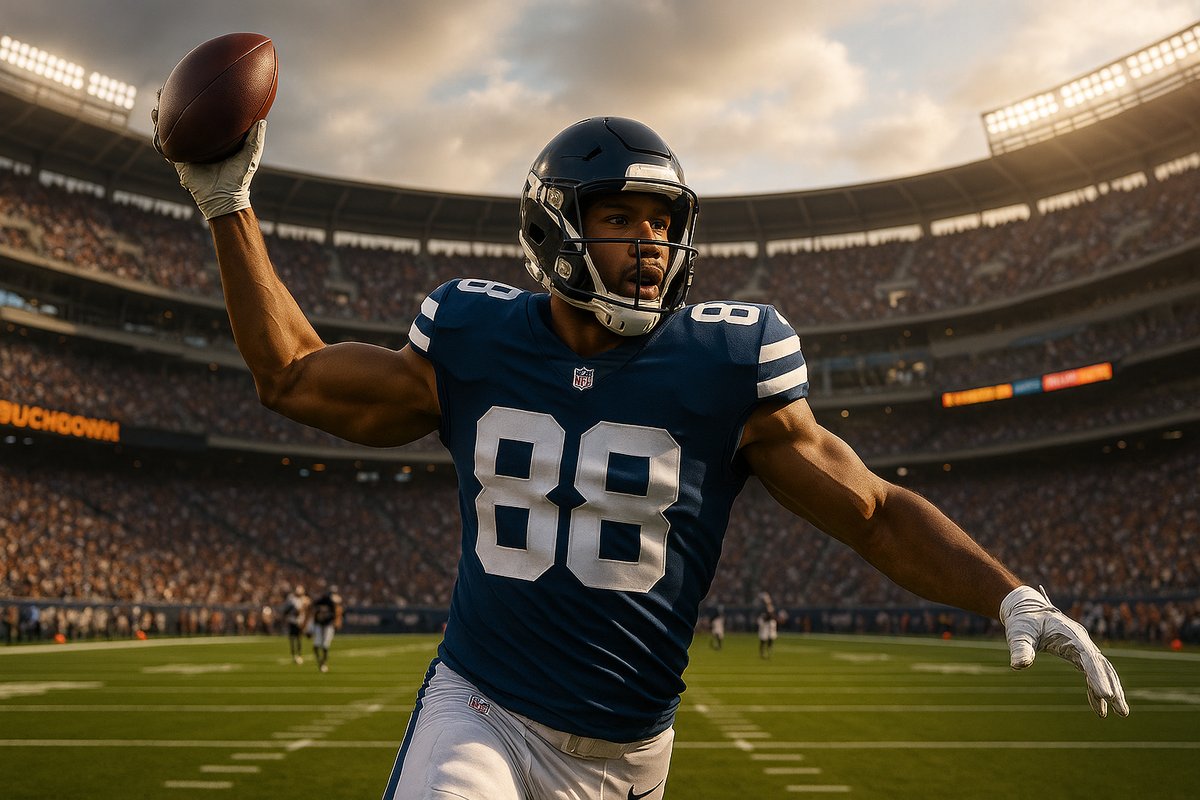
When you’ve lined up against elite tight ends in a defensive scheme, you understand how these guys wreck gap discipline and force linebackers into impossible coverage decisions. Breaking down the all-time leaders at the position shows athletes who blended size, route precision, and blocking to stretch defenses vertically while keeping run fits honest. I’ve studied enough film to know their production didn’t just pad stats—it translated into Super Bowl rings and altered how offenses are built today.
Tony Gonzalez sits at the top with 15,127 career receiving yards over 17 seasons, mostly with the Chiefs and Falcons. His ability to win vertically and in the intermediate zones turned him into a constant mismatch, earning 14 Pro Bowls and helping Atlanta reach Super Bowl LI. Jason Witten follows with 13,046 yards across 16 years in Dallas and a short Raiders stint. Watching him on tape, you saw a guy who played like an extra offensive lineman yet still created separation in coverage with football IQ that quarterbacks leaned on during playoff runs. Shannon Sharpe checks in third at 10,060 yards, using that explosive athleticism to help the Broncos secure back-to-back Super Bowls in the late ’90s. His physicality after the catch made safeties pay for poor angles.
Rob Gronkowski piled up 9,286 yards with the Patriots and Buccaneers, winning three Super Bowls by dominating in the red zone and as a blocker who opened lanes. Travis Kelce, still active with the Chiefs, has pushed past 10,000 yards while adding multiple rings, using precise route concepts that keep linebackers in conflict. When you’ve faced these kinds of tight ends, you know durability and adaptability separate the legends.
On receptions, Gonzalez leads with 1,325, serving as the ultimate security blanket. Witten sits at 1,228, often operating right off the line while creating mismatches. Sharpe’s 815 came in a lower-volume passing era yet still moved the chains for Denver and Baltimore. Touchdown numbers tell more of the story—Gonzalez with 111, Gronkowski at 93 (many in January), and Witten at 74. Antonio Gates reached 116 scores as an undrafted free agent, leveraging basketball background and red-zone strength to terrorize defenses for the Chargers. Ozzie Newsome’s 662 receptions helped pioneer the modern role.
These profiles show common traits: strong hands, yards after catch, and the versatility to align inline or in the slot. Their impact shows up in team success, with improved third-down conversions and play-action effectiveness whenever a dominant tight end anchors the offense. Sharpe’s presence alone forced coordinators to adjust entire game plans. Comparing eras, you see the shift from run-heavy schemes in the ’90s to today’s spread concepts that demand athletic tight ends who can still hold up in protection.
Beyond the elite tier, several other tight ends deserve recognition for sustained excellence at the position. Jimmy Graham carved out a Hall of Fame-caliber career with 8,603 receiving yards and 90 touchdowns split between New Orleans and other franchises, establishing himself as a vertical threat who caught passes on the move. Kellen Winslow Sr. accumulated 6,701 yards and 88 touchdowns during his Hall of Fame career with San Diego, revolutionizing the tight end position during the 1980s by proving the position could be a primary receiving option. Greg Olsen racked up 8,683 yards and 60 touchdowns across his 16-year career, becoming a model of consistency and professionalism in Carolina and beyond. His intelligent route-running and ability to get open on third down made him invaluable to multiple offenses.
The evolution of tight end usage has dramatically shaped modern offensive philosophy. In the 1980s and ’90s, tight ends were primarily blocking contributors who occasionally caught passes. Winslow and Sharpe changed that perception by proving tight ends could generate elite yardage totals. By the 2000s, the position had fully transformed into a receiving weapon capable of accumulating 100+ target seasons. Gonzalez exemplified this evolution, operating as a full-time receiver while maintaining blocking responsibilities. Today’s tight ends like Kelce and Patrick Mahomes’ favorite target operate in increasingly complex route trees, often aligned in the slot or spread wide rather than exclusively inline.
The statistical impact of elite tight end play extends beyond individual awards and records. Teams with Pro Bowl-caliber tight ends consistently rank higher in third-down conversion rates and red-zone efficiency. When quarterbacks have a dominant tight end in the lineup, their completion percentages typically increase by 3-5% on intermediate throws. The ability to motion a tight end across the formation or into the backfield creates defensive coverage conflicts that generate explosive plays. This explains why franchises value premium tight end draft picks and free agent acquisitions—they genuinely impact win probability.
Longevity represents another defining characteristic of the all-time greats. Gonzalez, Witten, Sharpe, and Kelce all played into their late thirties or early forties while maintaining production levels that kept defenses honest. This durability stems from intelligent game management, proper conditioning, and avoiding injury patterns. Gronkowski famously took unexpected time off to reset his body, returning sharper and more productive. The conditioning demands of the tight end position require managing lower-body wear and tear from blocking assignments while maintaining the explosiveness necessary for vertical routes.
The blocking effectiveness of elite tight ends often gets overlooked in statistical comparisons, yet it provides tremendous value. Gronkowski and Witten were arguably the best blocking tight ends of their respective eras, routinely sealing defensive ends and creating second-level advantages for running backs. A dominant tight end’s willingness to play a physical brand of football can add 0.5-1.0 yards per carry for the team’s running attack. This dual-threat capability—excelling as both a receiver and blocker—separates legendary tight ends from specialized receiving threats.
Looking at contemporary tight end production, Kelce has positioned himself to potentially crack the all-time receiving yards list before retirement. His consistent 100+ reception seasons with the Chiefs have yielded both individual accolades and team success, as Kansas City has constructed its offense around his reliability. Darren Waller, before injury concerns, demonstrated elite athleticism that harked back to Gronkowski’s physical dominance. Meanwhile, younger talents like Mark Andrews have shown they can develop into franchise cornerstones while maintaining the blocking-and-receiving balance that defines the most valuable tight ends.
Contract structures have evolved alongside tight end importance. Teams now regularly allocate significant salary-cap resources toward retaining premium tight ends, treating them similarly to elite wide receivers rather than depth contributors. This economic shift reflects the genuine impact elite tight ends provide on offensive efficiency and scoring potential. The market has firmly established that a dominant tight end in a modern offense is worth equivalent investment to a #1 receiver.
Key facts stand out clearly: Gonzalez owns the receiving yards mark, Witten’s 1,228 catches came over 16 seasons, Gronkowski’s 93 regular-season touchdowns came with three Super Bowl wins, Sharpe powered two Broncos titles, Kelce has surpassed 10,000 yards and multiple rings, and Gates hit 116 touchdowns undrafted. Collectively they’ve racked up more than 20 Pro Bowl nods.
Studying these leaders gives real insight into how sustained excellence at tight end drives offensive identity across generations. Whether you’re analyzing defensive schemes, offensive evolution, or individual performance metrics, the impact of elite tight end play remains undeniable and continues shaping how modern football is constructed at the highest levels.