
Peyton Manning Greatest Games Statistical Review
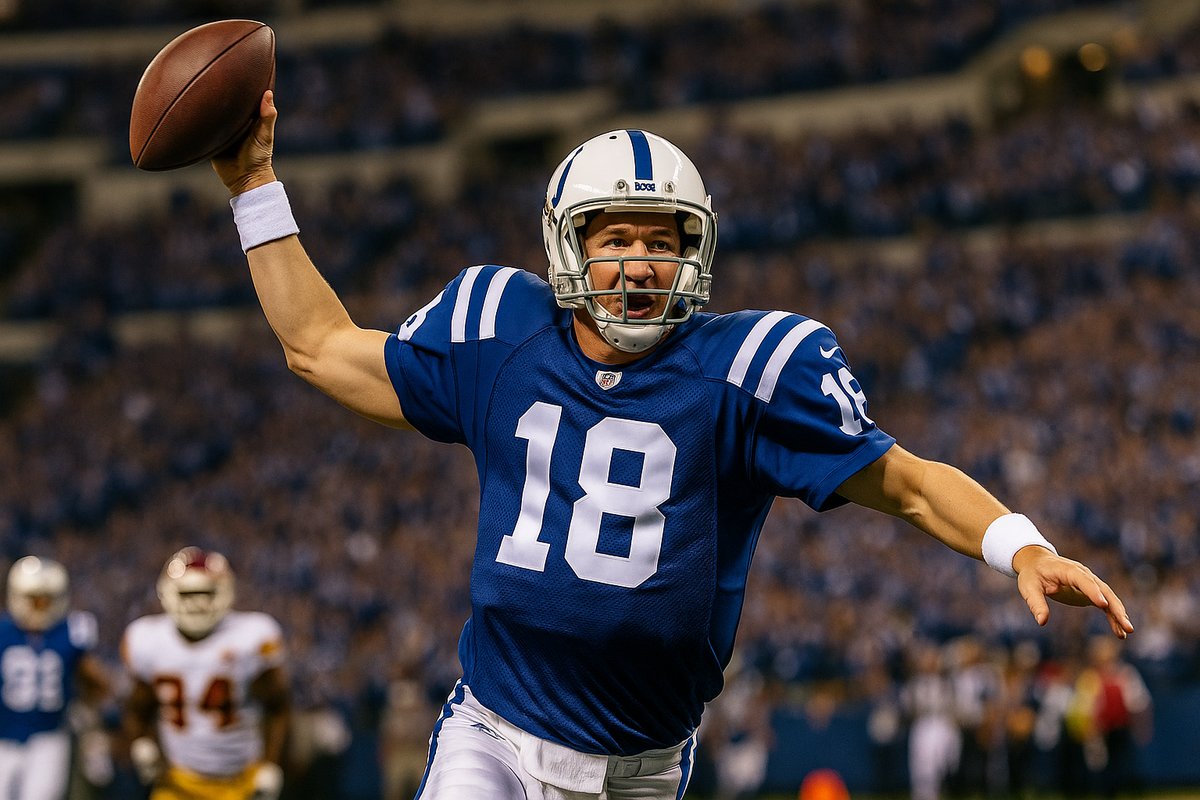
When you break down Peyton Manning’s career through the eyes of a front office that had to pay him and a fantasy manager who needed reliable production week in and week out, the numbers tell a story of calculated dominance rather than pure flash. His five MVP seasons weren’t just individual accolades—they were tied directly to the massive contracts that reshaped roster construction for the Colts and later the Broncos.
From a fantasy perspective, Manning’s 2003 campaign where he threw for 4,267 yards and 29 touchdowns wasn’t just Colts history; it was a blueprint for what a high-volume QB could deliver in weekly scoring formats. That overtime masterpiece against Denver—28-of-42 for 400 yards and four scores—would have been the kind of outing that won leagues, especially in formats that rewarded big plays and comebacks. What the front office was really thinking here was how to keep the supporting cast around him intact without breaking the cap, a challenge that only grew with each new deal.
Another 2004 explosion versus Tennessee—25-of-35 for 393 yards and five touchdowns with a 143.8 rating—highlighted his ability to carve up zone schemes, something that translated directly to fantasy value in an era before super-flex formats became common. Manning finished with 14 games of 400-plus passing yards, a mark that still stands out when you compare it to how teams today structure deals around mobile quarterbacks who can run for extra fantasy points.
What made Manning’s statistical dominance particularly impressive was his consistency across different offensive systems and personnel compositions. During his Indianapolis tenure, he worked with a rotating cast of receivers before Reggie Wayne emerged as a true alpha target. Yet Manning’s ability to elevate whichever receivers were on the field—from Brandon Stokley to Dallas Clark to Anthony Gonzalez—demonstrated a level of quarterback mastery that transcended scheme. His 2009 season, where he posted 4,500 yards and 33 touchdowns, came without a dominant running game, forcing the Colts to lean almost entirely on his arm. This forced reliance actually showcased why he commanded such premium contracts: the offense could be built entirely around his decision-making and accuracy.
In the playoffs, his 2006 AFC Championship performance against New England—27-of-39 for 349 yards plus that memorable 15-yard touchdown scramble—showed the dual-threat element that made him such a headache for defenses and such a boon for fantasy owners in deeper leagues. The Colts’ front office had bet big on his second contract extension knowing these moments would define their window. Super Bowl XLI itself was a clinic in ball security: 25-of-38 for 247 yards and a score in the rain, proving leadership under adverse conditions mattered more than raw yardage when rings were on the line.
The 2013 Denver season represented perhaps Manning’s most complete year from both a statistical and contract-justification standpoint. That season produced a league-leading 5,477 passing yards and 55 touchdowns—numbers that still rank among the most prolific single seasons in NFL history. His 121.1 passer rating that year was exceptional, and the Broncos’ 13-3 record demonstrated that the franchise’s massive investment in acquiring him was paying immediate dividends. Week 7 against Jacksonville saw Manning throw for 540 yards and five touchdowns, one of the finest performances of his career. These aren’t just stat lines—they’re the actual product that justified one of the richest contracts in professional sports at the time.
Later with Denver, the Super Bowl 50 outing was more about game management—13-of-23 for 141 yards—yet it delivered the second ring while the defense carried the load, a reminder of how contracts evolve as players age. Rivalry games against the Patriots and Ravens produced some of his cleanest statistical lines, including the 2013 demolition of Baltimore for 357 yards and four touchdowns. That 59-yard strike to Demaryius Thomas was peak late-career arm talent, the kind of play that would spike a fantasy lineup even in an age of tighter salary caps.
One often-overlooked aspect of Manning’s greatest games was his performance in environmental adversity. His Super Bowl XLI performance in the rain against Chicago wasn’t flashy by his standards, but it demonstrated an understanding that weather changes how passing games function. Conversely, his dome and controlled-environment performances benefited from the ability to air the ball out with precision—the 2013 Jacksonville game mentioned above or his numerous performances in the RCA Dome in Indianapolis. For fantasy purposes, understanding when Manning was playing in domes versus outdoor stadiums became predictive of his ceiling performances during his peak years.
Manning’s interception management during his MVP-caliber seasons was perhaps underrated. In 2004, despite throwing for 4,557 yards and 49 touchdowns, he threw only 10 interceptions—a 4.9:1 touchdown-to-interception ratio that remains elite by any standard. This ball security extended to his late-career years in Denver as well. Even in 2015, his final season, Manning maintained a 2.3% interception rate despite the physical decline that eventually led to his retirement. For general managers, this consistency meant fewer surprise negative weeks and more predictable scoring patterns, making it easier to build rosters around his production.
Advanced metrics back it up: an 82.4 Total QBR in 300-yard games and a sub-2% interception rate in multiple MVP years reflected the efficiency teams paid top dollar for. Across his career he posted 63 regular-season games with 300-plus passing yards, led 44 game-winning drives, and hit a 67.8% completion rate in close contests. His single-game peak of 472 yards came in 2011, and in two Super Bowl wins he combined for 388 yards with two touchdowns and zero picks.
The relationship between Manning’s greatest statistical performances and the salary cap landscape of his era illuminates an often-forgotten aspect of football economics. During his peak years, quarterback salaries were beginning their dramatic ascent, but Manning’s production justified every penny. His consistency in generating 4,000-plus yard seasons meant that the Colts could invest less in receiving depth and more in defensive back compensation. When he moved to Denver, his immediate impact—that 2013 season—validated the Broncos’ decision to acquire him, even at the cost of surrendering draft picks.
These performances weren’t just statistical outliers—they were the return on investment franchises chased when they handed Manning the biggest contracts of his era.