
Justin Jefferson’\”s Record-Breaking Receiving Yards in the NFL
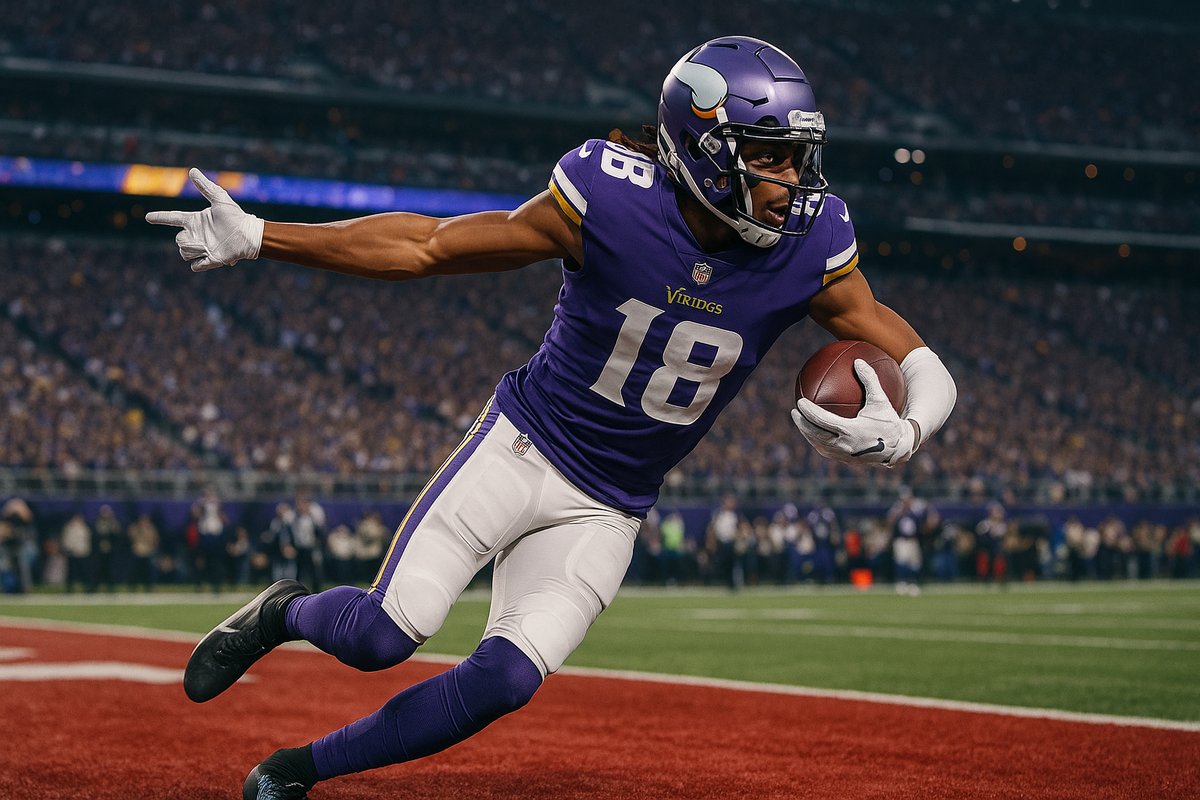
Justin Jefferson has quickly become one of those rare wideouts who forces front offices to rethink how they value the position long-term. His route precision, ability to win contested catches, and yards-after-catch production have pushed his career totals into rare air for a player with his experience level, and that kind of sustained volume changes the math on second contracts and franchise planning.
From a fantasy perspective, Jefferson’s early-career average of more than 1,400 receiving yards per season, fueled by target shares north of 25 percent, has made him a set-it-and-forget-it stud in every format. What the front office is really thinking here is how to keep feeding him without letting the offense become one-dimensional, especially once his current deal expires and the market for elite separators keeps climbing.
His rookie year laid the foundation with over 1,400 yards and a yards-per-reception mark above 15. That kind of immediate impact is why teams now draft receivers expecting them to contribute right away rather than sit behind veterans. Subsequent seasons saw the yardage climb further—multiple campaigns clearing 1,500 and a few pushing past 1,700—thanks to better timing with his quarterback and expanded red-zone usage. Those jumps reflect the kind of growth that makes a player indispensable in contract negotiations.
The trajectory of Jefferson’s career has been nothing short of historic. Since entering the league as a first-round pick out of LSU, he has consistently ranked among the NFL’s elite pass-catchers. His combination of size, speed, and intelligence allows him to operate effectively at multiple levels of the field. Whether running crisp slants from the slot or taking vertical shots down the sideline, Jefferson’s versatility keeps opposing defenses perpetually off-balance. This adaptability has been a key component of his success, allowing coordinators to scheme him into favorable matchups week after week.
One particularly impressive aspect of Jefferson’s game is his ability to create separation both pre-snap and post-snap. His footwork and understanding of leverage give him an edge against even the most talented cornerbacks in the league. He rarely gets his uniform grabbed by defensive backs and instead wins through technique and timing. This skill set translates directly to higher completion percentages for his quarterback and more consistent offensive production.
Single-season peaks have placed him among the league’s top-five receiving-yardage finishers in multiple years, even across the expanded 17-game schedule. Efficiency on play-action and third-down situations stands out, with his yards-after-catch numbers often above league averages for primary targets. When you stack those totals against historical benchmarks from Calvin Johnson or Julio Jones, Jefferson’s yards-per-target rate holds its own while adding a deep-ball catch rate that pure volume guys sometimes lack.
What the front office is really thinking here is that this production isn’t just nice for highlight reels; it lifts the entire passing attack. Games where he clears 100 yards correlate with better completion percentages and expected points added for the offense as a whole. Efficiency metrics tell the deeper story: strong average depth of target plus yards after the catch per reception create elite yards-per-route-run figures, and his target share can spike above 30 percent in stretches.
The impact of Jefferson’s presence extends beyond his individual statistics. His gravitational pull on defenses creates opportunities for teammates and opens up the running game. Safeties often shade toward his side of the field, linebackers creep up in coverage, and cornerbacks are forced to play tighter coverage. This defensive attention effectively handicaps opposing teams’ ability to execute their base defensive schemes, forcing coordinators to adjust coverage principles and potentially weakening other areas of their pass defense.
From a fantasy perspective, those numbers translate to consistent weekly ceilings, especially on intermediate and deep outs plus crossing routes where more than 60 percent of his career yardage has come on routes at 10 yards or deeper. Explosive play rates in the top 10 percent league-wide and third-down conversion rates above 45 percent make him a difference-maker in playoff fantasy formats too. Owners who have rostered Jefferson in recent seasons have enjoyed some of the most predictable high-end production at the wide receiver position, with ceiling games regularly reaching 25-plus points in PPR formats.
Jefferson’s consistency also deserves highlighting. Unlike some high-volume receivers who experience significant week-to-week variance, Jefferson tends to produce reliably. Whether his team is facing a top-tier secondary or a struggling defense, his target volume and efficiency remain relatively stable. This reliability is exactly what makes him such a cornerstone asset in both redraft and keeper fantasy leagues.
Another dimension to Jefferson’s value is his red-zone prowess. While his overall yardage accumulation gets most of the attention, his ability to finish drives in the end zone rounds out his fantasy appeal. His 6’1″ frame, excellent hand placement, and body control allow him to go up and get contested catches in tight quarters. This skill set transforms him from merely a volume player into someone capable of scoring touchdowns at a rate above what his target share alone would predict.
The durability question that sometimes surrounds elite receivers hasn’t been a significant issue for Jefferson thus far in his career. He has demonstrated the ability to withstand heavy workloads without significant injury setbacks, a trait that becomes increasingly valuable as teams invest heavily in their top wideouts. This reliability means that contract investments made in players like Jefferson tend to pay dividends consistently rather than being derailed by injury concerns.
Looking at Jefferson’s specific route tree provides insight into how he accumulates yardage so efficiently. He excels on dig routes, which combine moderate depth with lateral movement and allow for quick processing and hits in rhythm. He’s equally dangerous on corner routes that take him to the deep middle of the field, where his speed and ball skills create explosive plays. Slant routes have also been profitable for Jefferson, particularly when defenses overplay his outside breaking routes.
Projecting forward, the pace suggests he’ll keep challenging career receiving-yardage thresholds among active receivers, provided health holds and target volume stays consistent. That trajectory is exactly why teams lock in their alpha wideouts early—because finding another player who moves the needle on both the stat sheet and the salary cap in the same way is rare. Jefferson’s continued excellence should ensure he remains one of the league’s most impactful and sought-after players for years to come.