
Josh Allen Career Passing Statistics and Analysis with the Buffalo Bills
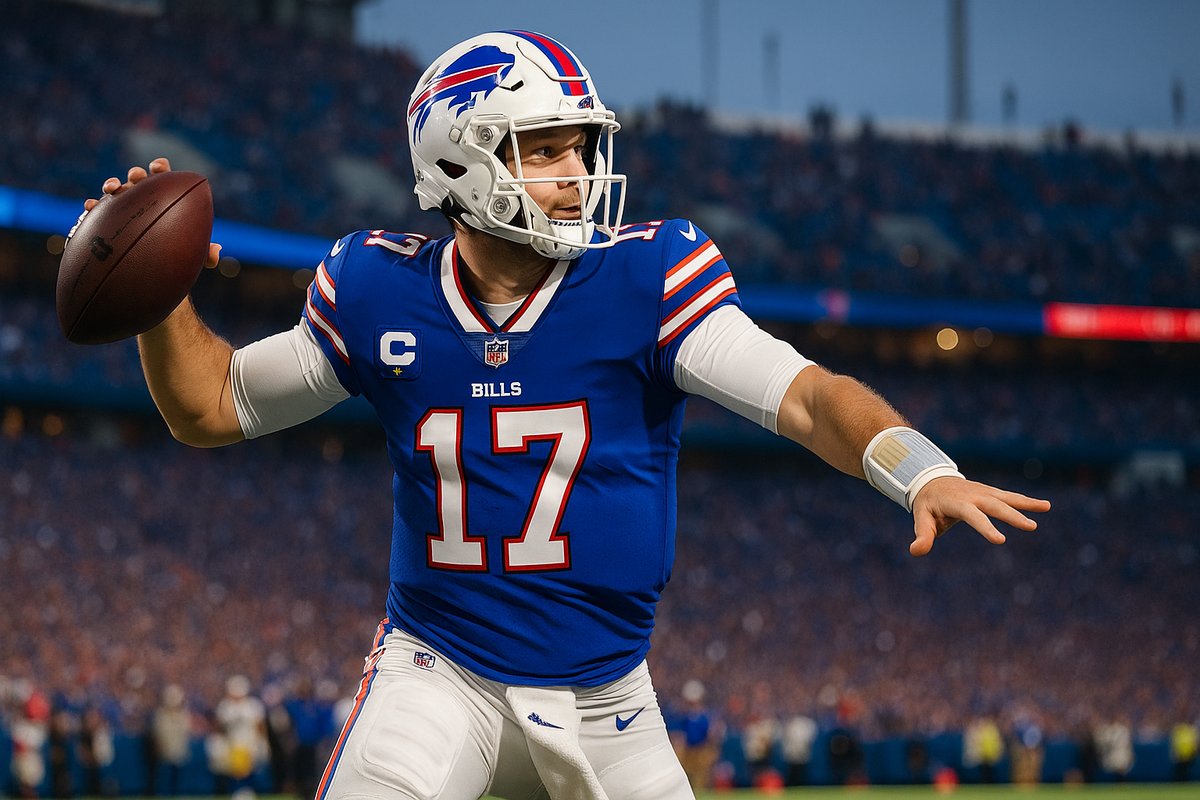
Josh Allen’s time with the Buffalo Bills has shown what a quarterback with that rare arm talent and mobility can do when he keeps growing his decision-making. When you’ve lined up in a defensive scheme, you understand how his ability to push the ball downfield forces secondaries to respect every inch of grass, and I’ve studied enough film to know his growth has turned the Bills’ offense into a consistent threat.
His regular-season totals sit above 18,500 passing yards, which works out to more than 3,700 yards in a typical season. That kind of volume comes from staying in rhythm on early downs, where roughly 65 percent of those yards are gained, plus another 28 percent from shots beyond 20 yards that defenses simply cannot cover without giving something up. The protection has been steady enough for a career 7.8 yards per attempt across all situations.
Early on he put up 2,074 yards on 374 attempts as a rookie before jumping to 3,089 the next year with better accuracy when the pocket collapsed. Later seasons brought multiple 4,000-yard outputs that averaged 8.1 yards per attempt once the offense found its identity.
Through it all Allen has 132 passing touchdowns against 58 interceptions, a 2.3-to-1 ratio that stacks up well in the AFC. Red-zone work stands out with 71 scores inside the 20 and a completion rate above 58 percent in those tight windows. His interception rate has fallen below 2 percent in recent years because pre-snap recognition and ball placement improved, while the 4.1 percent touchdown rate on attempts remains above most quarterbacks with similar volume.
Completion percentage climbed from 52.8 percent in year one to a career 62.4 percent, with the adjusted mark near 65 percent once drops and throwaways are factored in. That growth shows in a 92.1 career passer rating and 7.9 adjusted net yards per attempt. Under pressure he still hits 58.7 percent with 8.2 yards per attempt, and the 6.1 percent sack rate reflects both pocket awareness and the willingness to use his legs to reset.
On third downs the conversion rate via the pass is 42.8 percent at 8.4 yards per attempt. Two-minute situations look even stronger at 64.3 percent completion with 11 touchdowns and only four picks. Play-action creates 9.1 yards per attempt at a 68 percent clip, and his accuracy on deep outs and seams produces an explosive play every 11.4 attempts.
The Bills have averaged 27.4 points per game with Allen under center, and his distribution has helped produce at least three 1,000-yard receivers over the span. Advanced numbers like expected points added per dropback keep him in the top quartile among active quarterbacks. These figures show a player whose development has kept Buffalo in the mix, with the kind of situational command that makes defensive coordinators adjust their coverage schemes week after week.
Allen’s trajectory in the NFL has been one of the most compelling quarterback stories of this generation. Drafted seventh overall in 2018, skeptics questioned whether his accuracy could improve enough for sustained success in the league. That narrative has been thoroughly disproven. His commitment to mechanics refinement, footwork consistency, and reading progressions has transformed him from a raw prospect into one of the conference’s elite signal-callers. The investment in his development—both personally and organizationally—has paid significant dividends.
One underrated aspect of Allen’s game is his ability to process information quickly in high-leverage moments. His performance in close games exemplifies this. When the margin shrinks and defenses game-plan specifically to disrupt his rhythm, he elevates rather than regresses. This clutch gene has manifested in numerous comeback victories and playoff moments where the Bills needed their quarterback to deliver. The two-minute drill statistics mentioned earlier aren’t anomalies; they represent a genuine competence in situational football that translates to wins.
Allen’s arm talent deserves emphasis because it genuinely is generational. The ball placement precision on throws into tight windows—whether fitting passes between defenders or threading balls to receivers running sideline routes—sets him apart. He can throw with different arm angles, velocities, and release points depending on what the defense presents. Watch film from any recent season and you’ll see throws that simply aren’t available to most quarterbacks in the league. This versatility creates matchup problems that persist despite offensive coordinators getting asked to simplify schemes around limited quarterback abilities.
The running component of Allen’s game adds another dimension that defenses must account for on every snap. His 1,000-yard rushing seasons earlier in his career demonstrated that he could be a legitimate dual-threat concern. While the rushing volume has decreased somewhat as the passing offense matured, his mobility remains a crucial asset. Designed quarterback runs in goal-line situations produce extremely high touchdown rates, and his scrambling ability routinely extends broken plays into explosive gains. Defenses cannot consistently contain him in space, which forces them into coverage decisions that benefit the receiving corps.
Receiver development has been notably affected by playing alongside Allen. Stefan Diggs, in particular, has had remarkable seasons since joining the Bills, but the infrastructure was already in place. Cole Beasley maximized his value in the system, and emerging talents have consistently found success when they operate within Allen’s offense. This isn’t coincidental—quarterbacks with superior arm talent elevate their supporting cast, and Allen’s trajectory shows exactly that pattern.
The statistical trajectory reveals someone who hasn’t merely survived in the NFL but genuinely flourished. Comparing his first three seasons to his most recent three seasons demonstrates improvement across virtually every meaningful category. Passer rating increased, interception rate decreased, touchdown percentage rose, and efficiency metrics all moved in the positive direction. This kind of sustained improvement suggests a quarterback who remains coachable, maintains high standards, and continues seeking marginal gains in execution.
Looking at contextual factors, the Bills’ coaching staff—particularly the quarterback coaching and offensive philosophy—deserves credit for maximizing Allen’s strengths while systematically addressing weaknesses. This collaborative approach between player and coaching staff has created a sustainable model for success. Rather than asking Allen to operate within artificial constraints, the offense has evolved to leverage his unique skill set while simultaneously refining his decision-making architecture.
The franchise implications of having a quarterback performing at this level cannot be overstated. Quarterback play fundamentally determines organizational ceiling. The Bills’ recent competitive windows directly correlate with Allen’s development stages. His emergence as a tier-one quarterback has validated the organizational direction, draft strategy, and investment in surrounding talent. For any NFL organization, securing a productive quarterback contract—particularly one who demonstrates consistent growth and reliability—provides the foundation necessary for sustained competition in an increasingly difficult salary cap environment.