
Josh Allen’\”s Passing Mastery: Breaking Down His Buffalo Bills Career Statistics
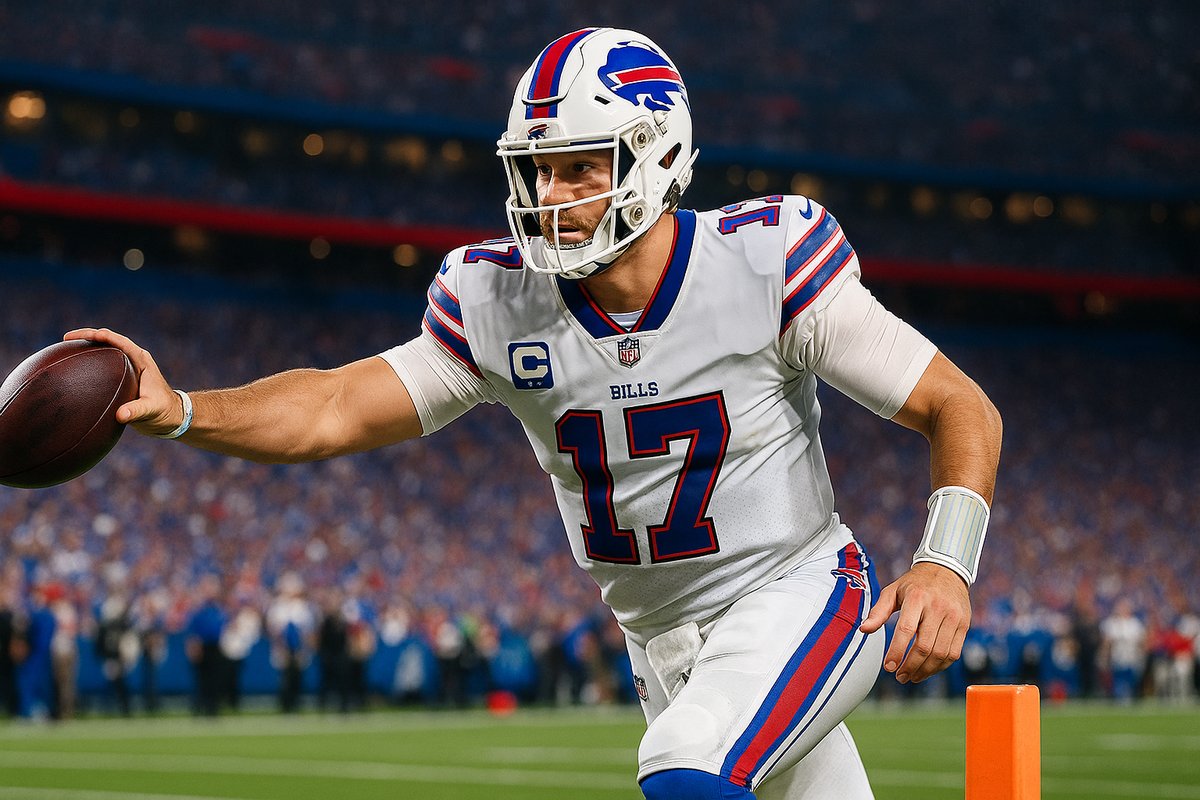
Josh Allen’s arc with the Buffalo Bills reads like a master class in turning raw arm talent into a franchise cornerstone, and that six-year extension the front office locked in reflects exactly how much they value his growth from gunslinger to calculated distributor. His passing numbers tell the story of a quarterback whose efficiency gains have kept the cap hit manageable while still delivering the explosive plays that define Buffalo’s identity.
Allen’s completion rate has climbed from the low-to-mid 50s early on to consistently above 60 percent lately, driven by sharper pre-snap reads and a willingness to take the higher-percentage underneath stuff that sets up play-action. What the front office is really thinking here is that those intermediate-route improvements between 10 and 20 yards buy them more third-down conversions without forcing Allen into unnecessary risk, which matters when you’re staring down future dead-cap numbers if the deal needs restructuring.
The trajectory of Allen’s accuracy improvements deserves deeper examination. In his first NFL season, his 52.8 percent completion rate reflected the growing pains of a prospect drafted seventh overall from Wyoming with tremendous upside but considerable mechanical work ahead. Fast forward to recent seasons, and his 63-65 percent completion rate places him firmly in the upper echelon of NFL passers. This isn’t just about throwing more strikes—it’s about understanding situational football. Allen has become increasingly selective about when to take deep shots versus when to move through his progressions methodically, a maturation that separates average starting quarterbacks from genuine franchise anchors.
Career passing yards have cleared 20,000 with an average north of 250 per game, and Allen continues to rank among the league’s deep-ball leaders. From a fantasy perspective, that vertical stretch ability turns him into a ceiling-raiser in any format that rewards big plays, especially in weeks when the Bills lean on him to carry the offense. His yards per attempt have hovered around 7.5 in recent seasons, a mark that consistently correlates with playoff success and championship-caliber quarterback play. When you combine that efficiency with his rushing upside—Allen averages nearly 65 rushing yards per game and has scored over 30 rushing touchdowns in his Buffalo tenure—you’re looking at one of the league’s most explosive dual-threat weapons operating from the quarterback position.
The rushing component of Allen’s game cannot be understated when evaluating his total value proposition. Unlike some mobile quarterbacks who’ve regressed as offenses ask them to stay in the pocket longer, Allen has maintained his rushing effectiveness while improving as a passer. His decision-making between running and throwing has become markedly sharper, reducing the negative plays that plagued his earlier years while preserving the explosive 15-20 yard scrambles that generate highlight footage and move chains. The Bills’ coaching staff deserves credit for developing this balance, designing run-pass options that let Allen attack defenses on his terms rather than forcing him into a binary choice.
The touchdown-interception tightrope has been Allen’s clearest evolution. Career touchdowns have cleared 150, putting him in rare air among active passers, while interception totals have dropped relative to volume thanks to better pocket patience and timing with his weapons. Red-zone touchdown rates staying above league average gives the Bills a reliable scoring punch inside the 20, something the front office factors into every draft plan because it reduces the need for extra offensive linemen or skill-position bandaids.
More specifically, Allen’s red-zone efficiency has improved markedly in the third-down and goal-line situations where defenses pack the box. His ability to recognize when coverage breaks down pre-snap and then execute from the pocket in compressed spaces separates him from passers who only thrive on vertical strips of field. The Bills have consistently ranked among the league’s best offenses in converting red-zone opportunities into touchdowns rather than field goals, and that differential compounds across 17 games—potentially 3-4 extra points per week, or 51-68 points across a full season. That’s the difference between a division title and a playoff seeding battle.
Beyond the box score, Allen’s expected completion percentage plus and air-yards-per-attempt metrics highlight how his arm talent creates separation even on off-target looks. That situational value keeps Buffalo’s play-caller from having to simplify the scheme, preserving the designed rollouts and bootlegs that maximize his mobility and downfield juice. His ability to throw off-platform and deliver strikes while moving laterally has been a differentiator since his earliest days, but pairing that arm talent with significantly improved footwork and release consistency has elevated his game to new dimensions.
Allen holds multiple single-game and single-season passing marks for the franchise, with his biggest yardage outbursts often pairing with multi-touchdown hauls. Those signature explosions reinforce his leadership role and give fantasy managers a reliable correlation between volume spikes and fantasy production in must-win weeks. His highest single-game passing yardage performances typically come against secondary-depleted defenses or in shootout scenarios, but what’s impressive is his ability to stay efficient even when opposing coordinators dedicate significant resources to shutting down the Bills’ receiving corps.
The supporting cast around Allen has evolved considerably during his tenure, from struggling with limited weapons early on to now orchestrating an offense featuring elite receiving talent. However, his individual improvements matter regardless of personnel. Even in games where Stefon Diggs is shadowed or injured, or when injuries plague the tight end room, Allen has proven capable of elevating replacement-level talent through improved decision-making and precision. His processing speed—the ability to move through progressions and identify open receivers in real-time—has compounded his statistical improvements year over year.
The entire offensive blueprint now orbits Allen’s skill set, and that alignment has forced defenses into predictable coverages while lifting everyone around him. What the front office is really thinking here is that this statistical foundation, paired with his contract structure, positions the Bills for sustained contention without blowing up the cap sheet every offseason. Allen’s blend of physical tools and growing football IQ keeps rewriting the modern quarterback template in Buffalo, creating a sustainable competitive window that could extend a decade or more given his age and trajectory. The quantifiable improvements in his passing mechanics, decision-making, and situational awareness over his six-year Bills career demonstrate that elite quarterback play isn’t just about raw talent—it’s about relentless refinement and the willingness to evolve your game at the highest level.