
Greatest Super Bowl Rivalries Examined
The greatest Super Bowl rivalries aren’t just about scoreboards—they’re about what happens when two elite units keep colliding under the brightest lights. When you’ve lined up in a defensive scheme, you understand how physical the chess match gets, especially when quarterbacks like Tom Brady face the kind of relentless pressure that forces timing routes to break down.
Take the New England Patriots and New York Giants clashes in Super Bowls XLII and XLVI. I’ve studied enough film to know Brady’s precision was elite, but Eli Manning’s two signature upsets came down to New York’s aggressive 4-3 front. In 2008 the Giants’ defensive line, led by Michael Strahan and Osi Umenyiora, posted nine sacks and held the Patriots to 14 points in a 17-14 win after New England had averaged 36.8 points per game that regular season. Manning finished those two title games completing 64 percent of his passes for 1,006 yards with zero interceptions in the rematch. The 2012 game ended 21-17, again with heavy pressure packages forcing three turnovers. Gap discipline from that front seven consistently disrupted New England’s rhythm despite the Patriots’ superior records.
What made this rivalry particularly significant was how it exposed weaknesses in the Patriots’ otherwise dominant system. New England had gone 18-0 in the 2007 regular season, yet the Giants’ blueprint—focused on interior pass rush and disguised coverages—became the template future opponents would study. The Patriots’ vulnerability to sustained pressure on Brady became evident, forcing defensive coordinators around the league to reevaluate their blitz packages. The Giants’ approach emphasized getting multiple defenders into the backfield quickly, something that contradicted the prevailing defensive philosophy of the era. This rivalry fundamentally altered how NFL teams prepared for playoff football.
Then there’s the Dallas Cowboys and Pittsburgh Steelers trilogy across Super Bowls X, XIII, and XXX. The Steel Curtain, anchored by Mean Joe Greene and Jack Lambert, kept Dallas under 100 rushing yards in the first meeting for a 21-17 Pittsburgh win. Terry Bradshaw threw for 932 yards and nine touchdowns in the first two games while Roger Staubach showed his dual-threat ability. By Super Bowl XXX, Emmitt Smith rushed for 102 yards behind the Cowboys’ offensive line in a 27-17 Dallas victory. Across the series Pittsburgh owned a +4 turnover differential, while Dallas converted third downs at 48 percent. Both organizations combined for 11 Super Bowl appearances between 1975 and 1996, a level of sustained talent development you rarely see.
The Cowboys-Steelers matchups represented a generational clash of football philosophies. Pittsburgh’s defense revolutionized the sport with the Steel Curtain’s man-coverage schemes and aggressive blitzing, while Dallas emphasized precision passing and innovative offensive formations. Coach Tom Landry’s creative play-calling consistently found ways to attack Pittsburgh’s defensive weaknesses, yet the Steelers’ superior pass rush—anchored by Greene, Lambert, and L.C. Greenwood—consistently disrupted Dallas’s timing. These games showcased how championship football required both creative offensive schemes and suffocating defensive execution. The rivalry demonstrated that sustained excellence required talent acquisition through both the draft and free agency, something both franchises mastered during this period.
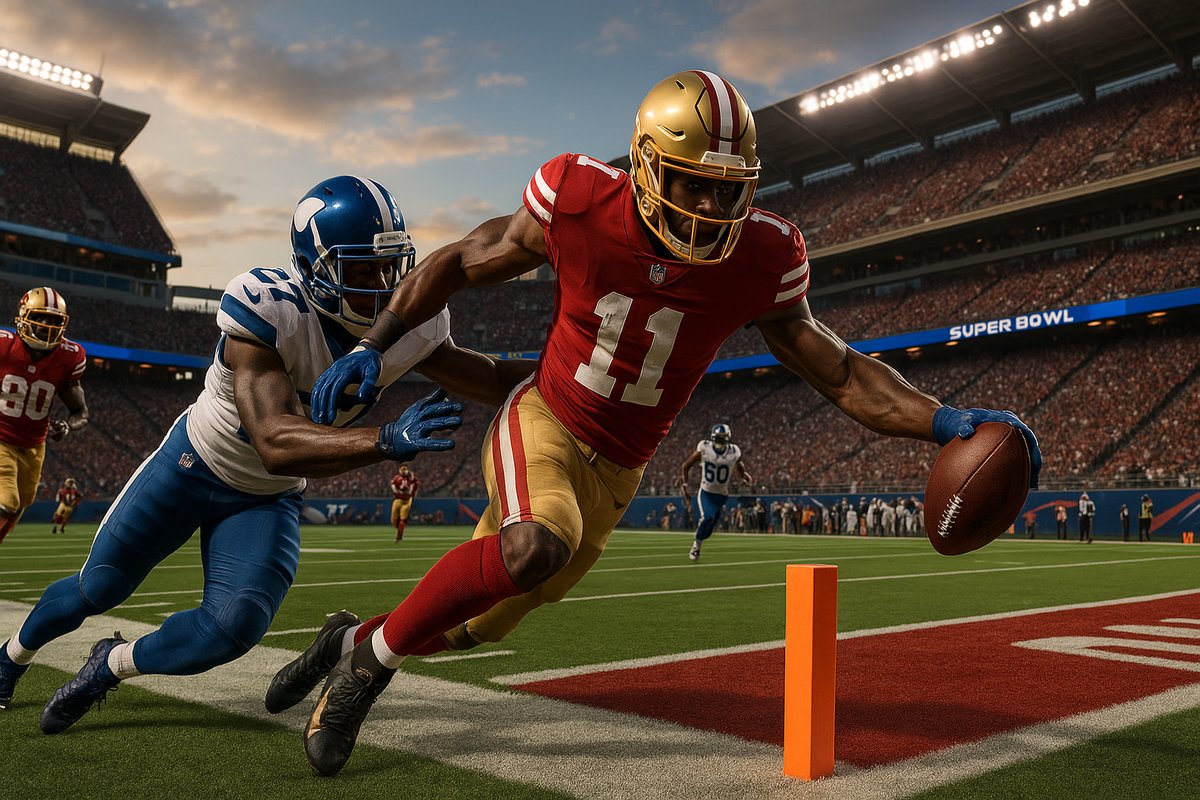
More recently the San Francisco 49ers and Kansas City Chiefs have added their chapter. In Super Bowl LIV, Patrick Mahomes engineered a 21-point comeback with 286 passing yards and two touchdowns, overcoming Raheem Mostert’s dominant run game. Andy Reid’s play-calling neutralized San Francisco’s top-ranked defense that allowed just 17.7 points per game in 2019. George Kittle’s blocking stood out alongside Travis Kelce’s production. The Chiefs repeated in Super Bowl LVIII with Mahomes throwing for 182 yards and the defense forcing two turnovers while converting 9-of-12 red-zone opportunities across both games.
The Chiefs-49ers rivalry illustrates the modern NFL’s emphasis on quarterback excellence and versatile skill position players. Mahomes’ ability to extend plays outside the pocket created mismatches against San Francisco’s scheme-dependent defense. The 49ers had built their 2019 team around a dominant defensive line and run-heavy offense, a throwback approach that initially looked unstoppable. However, Mahomes’ improvisation and the Chiefs’ willingness to spread defenses vertically with multiple receivers exposed limitations in San Francisco’s coverage design. By their second meeting two seasons later, the 49ers adjusted with Trey Lance attempting to inject more explosive elements, though injuries derailed that plan. These matchups have shown how quickly NFL strategies must evolve when facing elite quarterback play.
Understanding Super Bowl rivalries requires examining the organizational principles that keep franchises competitive across multiple championship runs. The Patriots’ dominance under Bill Belichick and Tom Brady spanned nearly two decades, yet they still faced the Giants twice in the Super Bowl because New York possessed the specific defensive tools to disrupt their rhythm. Similarly, both Dallas and Pittsburgh sustained excellence throughout the 1970s and 1980s through exceptional scouting, player development, and coaching consistency. The Chiefs’ recent run demonstrates how modern front offices emphasize building around a generational quarterback talent while surrounding him with complementary pieces.
The strategic implications of these rivalries extend far beyond individual games. Defensive coordinators study how the Giants pressured Brady to inform their own blitz packages. Offensive playcallers reference how the Cowboys attacked the Steel Curtain to understand formation advantages and coverage exploitation. Mahomes’ improvisation has influenced how teams approach quarterback evaluation, shifting emphasis toward athletic ability and play-making over traditional pocket presence. These rivalries become foundational texts in coaching clinics and scouting reports for years afterward.
Key facts from these series include the Patriots and Giants combining for 1,854 total yards across their two meetings, Dallas and Pittsburgh producing nine Pro Bowl selections from their 1970s shared rosters, Brady facing Manning in 1,248 combined snaps with a 3-2 edge outside the Super Bowls, Mahomes posting a 112.4 passer rating in the two Chiefs-49ers appearances, Pittsburgh recording 11 sacks while allowing just 6.2 yards per play, and Emmitt Smith rushing for 215 yards with three touchdowns in his lone win over the Steelers.
These repeated championship battles keep elevating legacies and forcing every defensive coordinator to adjust coverage schemes and front-seven responsibilities. From Brady versus Manning to Mahomes leading Kansas City, the physical and schematic details continue shaping how we evaluate draft prospects and team building for years to come. When organizations meet multiple times on the Super Bowl stage, they’re not just competing for rings—they’re establishing themselves as the standard bearers of their era, forcing the entire league to study their methods, replicate their success, and prepare for the next championship collision.