
Decoding NFL Play Action Pass Success Rates
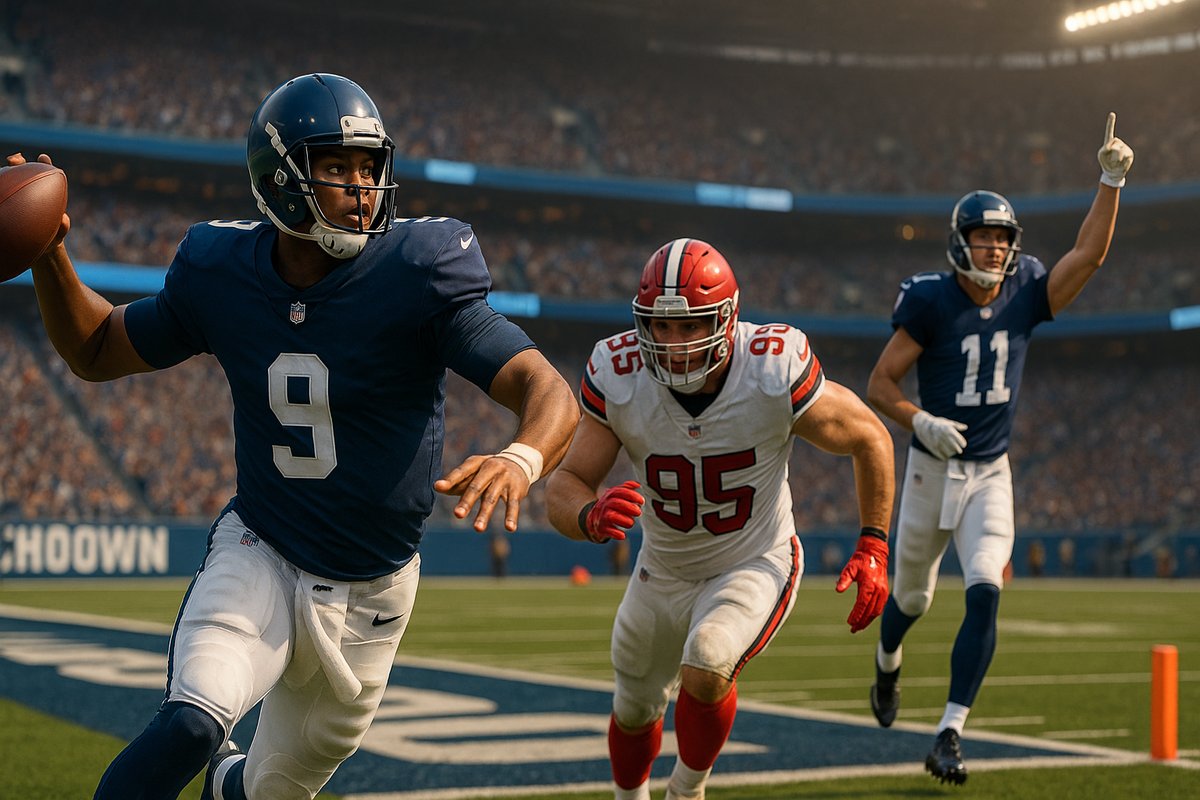
Play action remains one of the most efficient ways offenses create explosive plays, and the numbers back it up year after year. League-wide, these fakes push completion rates up roughly 8 percent while adding meaningful expected points, which is exactly why front offices keep prioritizing schemes that lean into them. From a fantasy perspective, quarterbacks who operate in heavy play-action systems often post inflated yardage and touchdown totals that don’t always translate in standard dropback volume, so knowing usage splits matters when setting your lineup.
The foundation is simple: a believable run fake pulls linebackers up, opening windows downfield. Defenses that sell out to stop the run get punished hardest, and recent seasons show play-action success rates sitting 8–12 percent above standard dropbacks. Tom Brady spent an entire career sharpening the timing of those fakes, turning them into signature weapons during multiple Super Bowl runs. What the front office is really thinking here is how to structure a quarterback’s deal around weapons and offensive-line depth that sustain this efficiency deep into a contract’s later years.
Modern coaching staffs layer pre-snap motion and bootlegs on top of the basic fake, forcing offensive linemen to hold blocks longer and receivers to sell run-blocking looks before releasing. Analytics show roughly 1.5 extra yards per attempt when defenses bite, and that margin shows up especially on third downs. From a contract standpoint, signal-callers who consistently post those boosted numbers gain leverage in extension talks because the production looks repeatable rather than scheme-dependent.
The evolution from West Coast roots to today’s spread packages has pushed play-action usage above 30 percent of pass plays in many offenses. The 2019 Chiefs proved how lethal it can be in the postseason, and that blueprint still influences how teams allocate draft capital toward versatile backs who can sell fakes. Historical data also reveals why certain franchises keep investing in run-heavy personnel even when the passing game is the priority: it sets up the play-action payoff that inflates EPA and helps control the salary-cap picture by extending drives.
Success metrics tell the story clearly—65 percent overall success rate on play action versus 52 percent on standard passes, with the gap widening inside the red zone. Baltimore and San Francisco have ranked near the top for years because their personnel groups keep defenses honest. Quarterback rating jumps an average of 15 points on these plays, and that bump directly affects how agents frame negotiations when a starter hits free agency.
Teams that run the ball more than 45 percent of the time tend to generate the highest efficiency on play-action shots. The 2020 Buccaneers under Brady exemplified the blueprint, and defensive coordinators have responded with simulated pressures, yet the tactic stays reliable when the timing is precise. From a fantasy perspective, running backs in these systems see a slight uptick in goal-line work because the run threat has to stay credible, which can create sneaky PPR value on check-downs after the fake.
Star quarterbacks develop signature mannerisms—Patrick Mahomes uses subtle hip movement to freeze second-level defenders—that become part of their market value when extensions get discussed. Running backs who excel at selling the handoff also influence overall success rates, and smart organizations factor that into roster-building even though those players rarely command top-of-market deals.
Coaches stress film study to refine footwork and shoulder fakes, which reduces turnovers and keeps drives alive. That developmental edge shows up in sustained success rates across multiple seasons and helps teams avoid the costly mistake of overpaying for a quarterback whose numbers collapse without heavy play-action support.
Key data points include an average 7.8 percent completion-rate lift league-wide, top-10 offensive EPA for teams using play action more than 35 percent of the time, Brady’s career mark above 68 percent in title-winning years, a 22 percent red-zone first-down edge, the 49ers leading the league in frequency during their 2019 run, a 15-point efficiency drop when defenses allow over 40 percent run success, a 102.4 passer rating versus 87.6 on dropbacks, and Super Bowl champions since 2015 averaging 28 percent play-action usage in the postseason.
The defensive counter-evolution has become increasingly sophisticated in recent years. Defensive coordinators now employ more pre-snap reads and disguised coverages to avoid getting caught flat-footed by play-action setups. Teams like the Los Angeles Rams and New England Patriots have built defensive schemes around identifying run fakes early, using safeties in robber coverage and linebackers in creeping techniques. However, the data shows that even well-prepared defenses struggle when quarterbacks and running backs execute with precision timing. The margin shrinks in matchups where defensive film study has been thorough, but the play-action advantage rarely disappears entirely.
Understanding personnel usage patterns provides critical context for evaluating team strategy. Offenses featuring bell-cow running backs like derrick henry or najee harris can exploit play action at higher rates because defenses must commit extra defenders to the box. Conversely, spread formations with multiple pass catchers can use play action more sparingly but with greater explosive potential because linebackers have already been stretched by receiver positioning. The best offenses balance these elements by keeping multiple run looks in their pre-snap arsenal while varying personnel packages.
The impact on secondary receivers deserves specific attention. Tight ends and slot receivers operating underneath coverage benefit dramatically from play-action calls because linebackers crash downhill to defend the run fake, vacating short zones. This explains why teams with talented receiving tight ends like the Kansas City Chiefs and Cincinnati Bengals incorporate play action at rates above league average—they’ve identified personnel mismatches that the strategy accentuates. Fantasy players who recognize this correlation can identify undervalued intermediate receivers on play-action heavy teams during draft season.
Situational tendencies reveal additional layers of play-action effectiveness. First-and-ten situations produce the highest success rates because defenses must respect both run and pass possibilities equally. However, third-and-short presents an interesting paradox: while play action gains yards more efficiently, some coaches abandon it believing defenses expect the run fake in obvious passing scenarios. Data suggests this conservative approach costs efficiency, as teams that stay committed to play action on third-and-short maintain their success-rate advantage. The most aggressive and successful offenses treat down-and-distance as less predictive than pre-snap reads and personnel alignment.
Injury context frequently disrupts play-action effectiveness. When lead running backs go down, offenses lose the credibility necessary for effective run fakes. Backup runners who can’t convince defenses they’re receiving a handoff turn play-action plays into predictable passing attempts. This reality explains why teams investing in quality backup running backs gain competitive advantage in systems built around play-action principles. A second-string runner who sells fakes well can preserve offensive efficiency during injuries.
The interplay between play action and offensive line performance cannot be overstated. Play-action requires longer execution windows because quarterbacks must sell the fake before beginning their progression. Offensive lines holding blocks for 2.5-3 second windows must be elite-level. Teams with aging or marginal pass protection see diminishing returns from play-action calls as pass rushers collapse pockets faster than quarterbacks can complete fakes. Conversely, teams featuring elite pass protection like those with Hall-of-Fame caliber centers or guard duos see play-action success rates trending toward 70 percent.
Red-zone dynamics shift dramatically under play-action frameworks. The shortened field means defenses can align safeties more aggressively, reducing separation advantages. However, play action’s linebackers-in-motion advantage becomes even more pronounced because defenders cannot afford to bite on run fakes near the end zone. Teams maintaining above-average red-zone scoring efficiency typically employ play action on 35-45 percent of short-yardage opportunities, creating first-down conversions and goal-line scores at elevated rates.
Historical championship data points toward consistency with play-action investment. Every Super Bowl champion since 2015 demonstrated commitment to play-action schemes, whether through Kansas City’s bootleg-heavy approach, Tampa Bay’s intermediate play-action strikes, or Los Angeles Rams’ outside-zone rushing setup. This correlation isn’t coincidental—playoff defenses playing multiple games against the same opponent become increasingly difficult to deceive, making basic dropback passing less reliable. Play action’s ability to manipulate pre-snap leverage gives teams additional ways to attack hardened playoff defenses.
Ultimately, franchises that keep refining this element maintain a competitive margin that shows up in both regular-season standings and cap management. The chess match on every snap continues to reward teams that understand how a well-timed fake alters everything that follows.
Sources
- NFL.com Statistics – Official NFL play-by-play data and performance metrics
- ESPN NFL Statistics – Comprehensive offensive and defensive statistical analysis
- Pro Football Reference – Historical NFL play data and advanced analytics
- The Athletic NFL – In-depth analysis and tactical breakdowns of play calling strategies