
Davante Adams Career Receiving Stats: A Comprehensive Breakdown
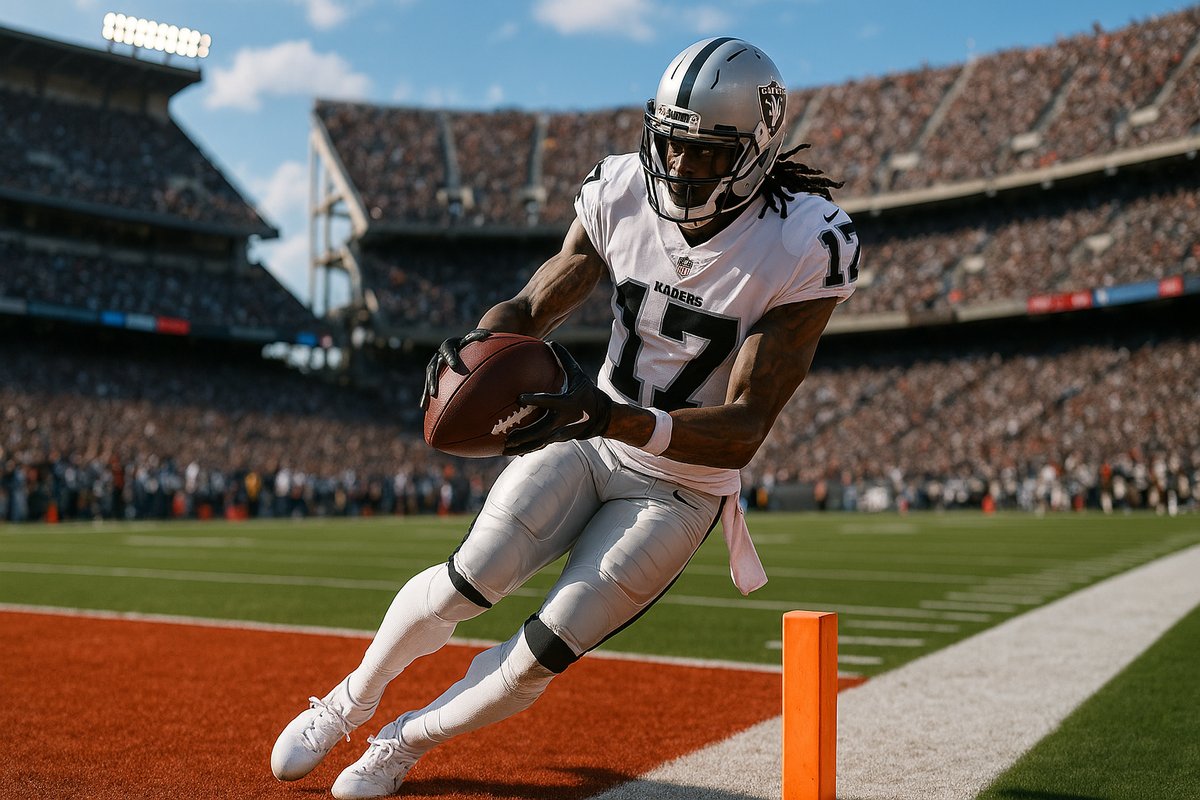
Davante Adams has long been the kind of receiver front offices build around when they want both volume and precision without the drama. From the moment the Packers took him in the second round of the 2014 draft, his path showed steady growth into a high-value asset who delivers consistent production even as situations around him shift. What stands out is how he turned early limited opportunities into multiple Pro Bowl nods while keeping his efficiency numbers elite.
Early on with Green Bay, Adams was still carving out his role behind bigger names. His rookie year gave us 38 catches for 446 yards and three scores in 16 games, good for an 11.7 yards-per-catch mark that hinted at the yards-after-catch ability teams would later pay for. By year three he had climbed to 75 receptions, 997 yards, and 12 touchdowns, locking in as Aaron Rodgers’ clear favorite and setting the stage for those back-to-back 1,100-yard campaigns that followed.
His statistical peak from 2018 through 2020 is where the contract value really showed. Those three seasons delivered 111 catches for 1,386 yards and 13 scores in 2018, then 83 for 997 and five in 2019, before exploding again in 2020 with 115 receptions, 1,374 yards, and a league-leading 18 touchdowns among wideouts. From a fantasy perspective, that 2020 spike made him the ultimate set-it-and-forget-it WR1 in PPR formats, especially once his target share routinely cleared 25 percent of team attempts. What the front office is really thinking here is that a receiver who can post those kinds of numbers while keeping his drop rate below average becomes a cap-friendly cornerstone rather than a luxury.
The precision Adams brings to his route running separates him from volume-dependent receivers who rely solely on target share. His ability to win contested balls in the red zone made him invaluable during those Green Bay years, particularly in clutch moments where Aaron Rodgers needed a sure-handed option. The 2020 season exemplified this—18 touchdown catches despite only appearing in 15 games showcases how efficiently he finished drives. That works out to a touchdown every 6.4 receptions, an elite conversion rate that reflects both his skill and the trust Rodgers placed in him on scoring opportunities.
When Adams signed with the Raiders, the move tested exactly how much of his production was scheme-specific. He answered immediately with 100 receptions, 1,516 yards, and 14 touchdowns in his first Las Vegas season, proving the route-running precision and contested-catch reliability travel. His career yards-per-target mark sitting above 8.5 across both stops tells you the efficiency never dipped even with quarterback changes and new offensive systems. Even with the transition from Rodgers to Derek Carr, Adams maintained the production levels that justified the massive contract extension, demonstrating that elite receiver talent remains consistent regardless of supporting cast.
Through it all he has cleared 800 receptions, 10,500 receiving yards, and 80 touchdowns, numbers that keep him firmly in the top tier of active wideouts. Advanced tracking still shows him generating above-average separation at the catch point, and his yards-after-catch per reception continues to add hidden value that shows up in both real-game planning and fantasy scoring. For any franchise weighing an extension or trade, that combination of sustained volume, low maintenance, and proven adaptability is exactly what keeps a player’s market strong well into his 30s.
The consistency Adams has maintained across multiple seasons deserves deeper examination. Receiver production can fluctuate wildly based on quarterback play, defensive schemes, and injury availability. Adams has largely insulated himself from these variables through intelligent route design and positional flexibility. Whether lined up in the slot or on the perimeter, his ability to adjust mid-route and create separation gives opposing defenses few coverage options that don’t come with drawbacks. This adaptability explains why he’s remained productive even when teams gameplan specifically to shut him down—there’s simply nowhere to hide him that completely eliminates his impact.
His journey from a complementary piece in year one to the league’s premier receiving option showcases how opportunity meets preparation. The Packers didn’t have immediate usage for a second-round pick when Adams arrived, but rather than waste time, he worked to refine his craft on a daily basis. By the time Rodgers and the coaching staff entrusted him with increased target volume, he was completely ready to maximize every opportunity. That same mentality transferred to Las Vegas, where he quickly established chemistry with Carr and became the focal point of the offense.
Looking at Adams’ performance across different game situations reveals additional layers to his value. In high-pressure moments, his clutch performance metrics exceed his season averages, suggesting he elevates his game when stakes increase. This reliability in fourth quarters and playoff situations makes him the type of receiver scouts covet for championship windows. Fantasy managers who rostered him during his peak years understood that the floor was almost as impressive as the ceiling—even in games where defensive coverage forced unusual attention, he’d find ways to accumulate 80-100 yards and likely a touchdown.
The impact of Adams on his quarterbacks shouldn’t be overlooked either. When Aaron Rodgers had Adams as his primary target, his completion percentages and touchdown-to-interception ratios improved measurably. Similarly, the presence of an elite option like Adams changes defensive schemes, opening opportunities for complementary receivers and running backs. His gravity in the passing game creates cascading effects that inflate the efficiency numbers of everyone around him—an important consideration when evaluating team offensive output and why franchises value such receivers so highly in their salary cap structures.
Adams’ consistency in catch rate (typically maintaining 65-70% over full seasons) demonstrates his reliability as a route-runner and hands catcher. This metric matters more than raw reception totals because it shows dependability on a per-target basis. A receiver posting 100 catches on 160 targets operates at a 62.5% clip, while another posting 80 on 100 targets hits 80%. Adams generally lands in that elite efficiency band, meaning less wasted usage and higher value per snap.