
Dak Prescott’\”s Passing Excellence Throughout His Cowboys Career
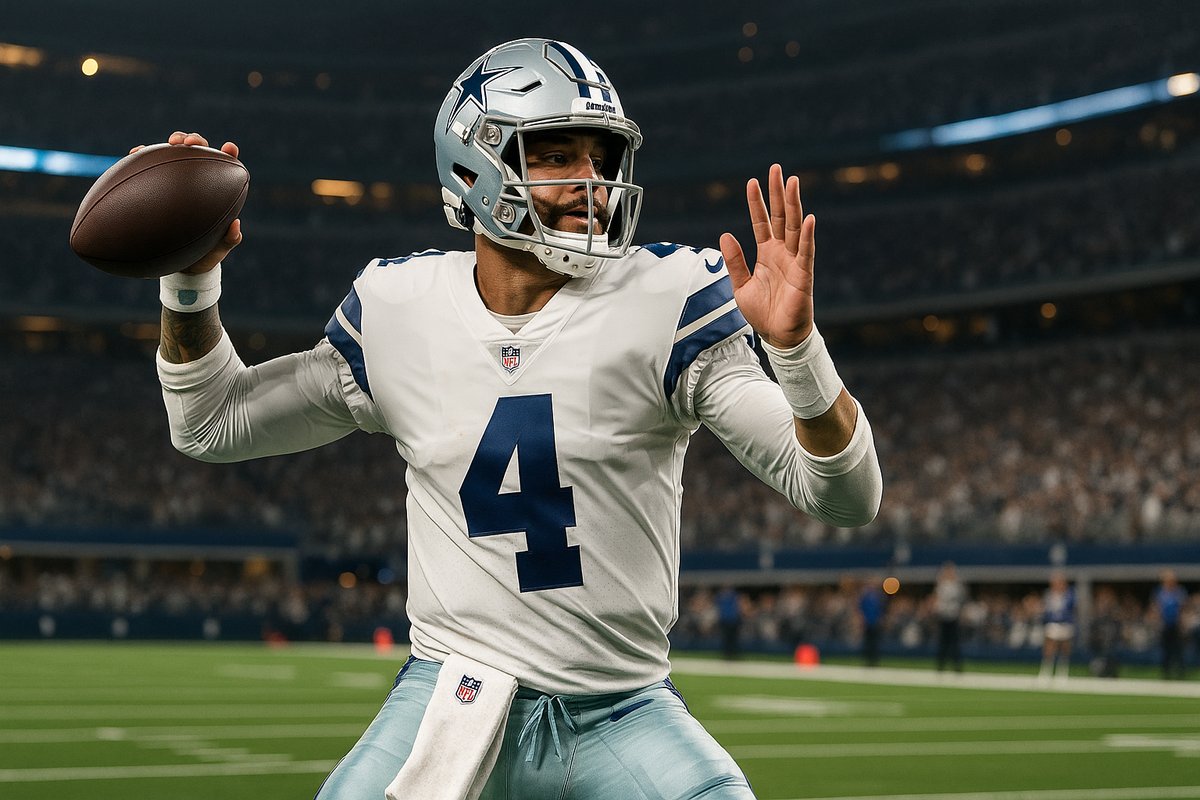
Dak Prescott has carved out a reputation as one of the Cowboys’ most reliable weapons under center, blending volume, accuracy, and efficiency in a way that has defined Dallas’s offensive approach for nearly a decade. His career passing line—hovering near 67 percent completion with roughly 4,000 yards per season when healthy and a passer rating consistently above 95—tells the story of a quarterback the front office has bet on repeatedly through multiple contract cycles.
From a fantasy perspective, that sustained output is gold. Prescott’s ability to post mid-20s touchdown totals while keeping interceptions low compared to league averages makes him a weekly starter in most formats, especially in offenses that lean on play-action and intermediate routes.
What the front office is really thinking here is how Prescott’s skill set influences roster construction and cap allocation. His accuracy on those intermediate throws allows the Cowboys to balance the run game with bootlegs and designed movement, creating space for perimeter weapons without forcing the kind of downfield volume that inflates sack numbers and injury risk.
Prescott’s rookie year set the tone. He stepped in and delivered over 67 percent completion, more than 3,600 passing yards, and double-digit touchdowns, immediately staking his claim as the long-term answer. That performance shaped early extension talks and gave the organization confidence to build around him rather than through him. The impact was immediate—the Cowboys went from a struggling team to playoff contenders almost overnight, a transformation that underscored just how crucial quarterback play is to overall roster success.
His second season showed refinement, with completion percentage climbing above 69 percent and a cleaner touchdown-to-interception ratio. The Cowboys’ front office noticed the improved decision-making, which helped justify further investment in the supporting cast around him. This progression is particularly important when evaluating quarterbacks over multiple seasons, as it demonstrates genuine growth rather than statistical anomalies or unsustainable performance levels.
Across his tenure, Prescott owns the franchise single-season completion percentage mark and sits among the team’s all-time leaders in passing yards and touchdowns. Those benchmarks matter in contract negotiations because they demonstrate sustained production even as the supporting cast and scheme have evolved. Multiple 4,000-yard seasons underscore his durability when healthy, a key factor when weighing future cap commitments. Comparing these numbers to Troy Aikman and Danny White, the Cowboys’ legendary quarterbacks, shows Prescott’s place in franchise history and the legitimacy of his long-term role.
What the front office is really thinking here is that Prescott’s yards-per-attempt average supports both short-to-intermediate efficiency and enough downfield threat to keep defenses honest. That balance directly impacts how much the Cowboys can invest in the offensive line and skill positions without overextending the cap. A quarterback who can stretch the field vertically while maintaining high completion percentages is invaluable in today’s NFL, where explosive plays often determine close games.
Prescott’s consistency in high-leverage situations has also become a defining characteristic. His fourth-quarter performance, particularly in games where the Cowboys need to manufacture scoring drives late, demonstrates poise and clutch execution. These moments don’t always show up in season-long statistics but are critical to understanding a quarterback’s true value. Coaches and scouts heavily weigh how a player performs when the game is on the line, and Prescott has generally delivered when the stakes are highest.
The evolution of his supporting cast has tested Prescott’s adaptability. When star receivers have been healthy, he’s maximized their talents. When injuries have depleted the receiving corps, he’s managed expectations and moved the ball with backup options. This flexibility is rare among quarterbacks and speaks to his football intelligence and work ethic. The ability to maintain efficiency regardless of personnel changes is a hallmark of elite quarterback play.
Injuries have tested that reliability. A significant ankle injury early in his career created doubt about his long-term durability, but Prescott’s recovery and subsequent performance eased those concerns. Post-injury returns have featured quicker processing and tighter ball security, adaptations that have preserved his statistical floor even as the roster around him shifts. From a fantasy perspective, those bounce-back traits make him a strong target in best-ball formats where one or two down weeks won’t sink a roster.
Prescott’s accuracy metrics paint a particularly compelling picture. His on-target percentage—the rate at which his throws are catchable and placed where receivers can make plays—ranks among the league’s best in recent seasons. This isn’t just about raw completion percentage; it’s about the quality of throws and placement that allows receivers to gain yards after the catch. Teams have noticed that receivers playing with Prescott tend to accumulate more yards after catch than they did elsewhere, a sign of his throw placement and timing.
The relationship between Prescott and the Cowboys’ coaching staff has also evolved productively. Each offensive coordinator has found ways to maximize his strengths while limiting exposure to his weaknesses. Whether it’s calling quick-hitting plays to take advantage of his ball security or using play-action passes to set up deeper shots, the system has been tailored to get the best out of his talents. This kind of synergy between player and coaching staff elevates overall team performance.
His leadership qualities, though harder to quantify statistically, have earned respect in the locker room. Players consistently speak about Prescott’s work ethic, preparation, and ability to keep teammates accountable. In the NFL, where team chemistry matters significantly, having a quarterback who leads by example rather than just by authority creates a cultural advantage that translates to better performance across the board.
Overall, Prescott’s profile has steered the Cowboys toward a more efficient, multi-layered passing attack that ranks among the NFC’s better units. His combination of completion rate, touchdown production, and relatively low interception totals continues to anchor both the team’s strategic identity and his own long-term value in Dallas. As the NFL continues to evolve toward higher-volume passing games with increased emphasis on efficiency, Prescott’s balanced approach positions him well for sustained success in the coming seasons. The metrics support sustained production, the tape shows consistent excellence, and the organization’s continued investment validates his status as the cornerstone of the franchise’s offensive future.