
Career Achievements of Tom Brady
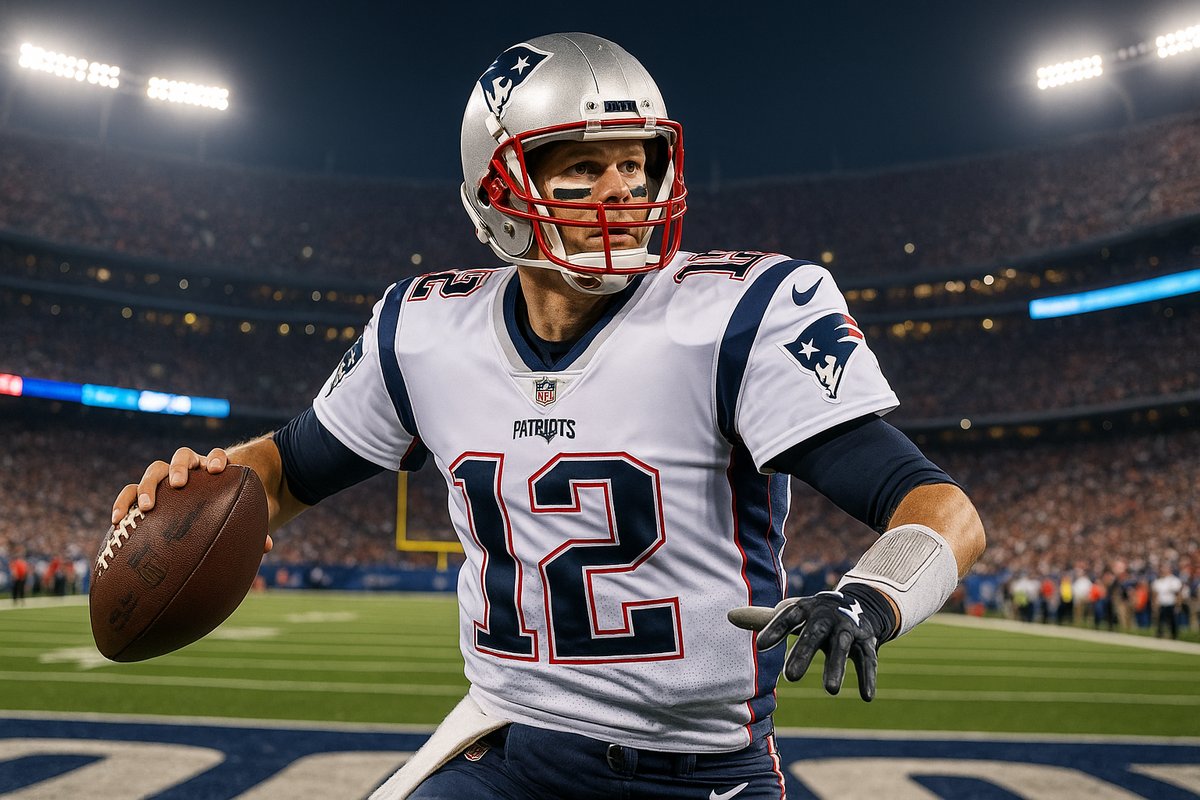
Tom Brady’s run in this league is the kind of thing you can’t help but study over and over in the film room. From a sixth-round afterthought to the most decorated quarterback we’ve seen, the man stacked seven Super Bowl rings and a mountain of passing numbers that still make defensive coordinators lose sleep. When you’ve lined up in a defensive scheme, you understand how rare it is for one guy to keep bending coverages and finding creases for two decades straight.
Brady came out of Michigan where he battled for the starting job and eventually led the Wolverines to some big wins. Scouts slept on him though, and he slid all the way to the 199th pick in the 2000 draft by the Patriots. That late-round chip on his shoulder showed up every time he stepped in the huddle. I’ve studied enough film to know that kind of undervaluation turns into extra film study and footwork reps that separate the good from the great.
He took over in 2001 once Drew Bledsoe got hurt and never looked back. Right away you saw the pocket poise and how quickly he grasped what Bill Belichick wanted on the defensive side of the ball. That first full season ended with a Super Bowl XXXVI win and MVP honors, setting the stage for everything that followed.
With New England he collected six total rings, turning the franchise into a yearly contender. The wins in XXXVIII and XXXIX came first, then those wild comebacks in XLIX, LI, and LIII where he’d march down the field in the fourth quarter like clockwork. From a linebacker perspective, watching him exploit gap discipline and force secondaries into conflicted coverage schemes was equal parts impressive and frustrating.
What made Brady’s Patriots dynasty particularly elite was the consistency across nearly two decades. The organization won 17 AFC East titles in 19 seasons, establishing an iron grip on one of football’s toughest divisions. That kind of sustained excellence requires more than just talent—it demands meticulous preparation and an understanding of how to evolve schemes as the league adapts. Brady’s ability to read defenses pre-snap improved measurably each year, and his communication with receivers became almost telepathic by the later years in New England. The two-minute drill essentially became his signature, where he’d dissect coverages and execute with surgical precision when games hung in the balance.
During those Patriots years the records piled up, including the single-season touchdown mark at the time plus consistent leads in yards and completion percentage. Pairing him with Rob Gronkowski and Julian Edelman gave the offense one of the most efficient attacks we’ve seen, and they racked up 17 division titles along the way. The chemistry between Brady and Gronkowski deserves particular mention—their connection on third downs and in the red zone set a standard that few quarterback-receiver duos have matched. They combined for clutch plays in multiple Super Bowl victories, with Gronkowski’s ability to create separation and move the chains complementing Brady’s precise timing perfectly.
Brady’s statistical achievements during his Patriots tenure were historic. He threw 581 touchdowns in New England, establishing himself as one of the most prolific scorers in NFL history. His regular season win-loss record reached an astonishing 219-88, a winning percentage that speaks to his consistency and the organization’s ability to construct complementary rosters. He earned 13 Pro Bowl selections during this era, though many felt he deserved consideration in additional seasons when he was still at an elite level but missed the voting.
After 2019 he landed in Tampa Bay and immediately flipped that roster. His first season there produced Super Bowl LV, making him the first quarterback to win it all with two different teams. That move showed he could walk into a new system, read new coverage shells, and still deliver at the highest level well into his forties. The Buccaneers roster he joined had talented pieces, but they needed quarterback play at an MVP level to reach the postseason and ultimately capture it all. Brady’s leadership transformed that locker room, and his willingness to build chemistry quickly with receivers like Mike Evans and Chris Godwin proved instrumental.
The 2020 season in Tampa Bay was remarkable for another reason entirely—it demonstrated that Brady could still execute at the highest level in an unfamiliar offense. Coordinator Byron Leftwich’s vertical passing attack suited Brady’s strengths, and he threw 40 touchdown passes during the regular season at age 43. In the Super Bowl, he orchestrated a masterclass against Patrick Mahomes and the Kansas City Chiefs, throwing three touchdown passes and managing the clock expertly in a team victory. That performance silenced any remaining doubters about whether he could thrive outside New England’s system.
Those later Bucs seasons kept the playoff runs going and the stats climbing. He walked away after 2022, but the influence on how quarterbacks train, prepare mentally, and extend their careers is still being felt across the league. Brady’s approach to fitness and recovery, which involved specialized diets, targeted conditioning, and meticulous film study, became a template that younger players now follow religiously. His TB12 method and public statements about longevity training inspired an entire generation to view their bodies as long-term investments rather than short-term assets.
The numbers tell part of it—seven Super Bowls, five Super Bowl MVPs, three league MVPs, ten Super Bowl starts, over 89,000 regular-season passing yards, 649 touchdowns, 15 Pro Bowls, the lowest interception rate among qualifiers, two Comeback Player awards, and that 2028 first-ballot Hall of Fame nod—but the real story is how he kept defenses guessing long after most players fade. His career interception-to-touchdown ratio of roughly 1:3 remains among the best in NFL history, reflecting both his decision-making and arm talent. He also holds the record for most fourth-quarter comeback wins with 57, a statistic that encapsulates his clutch gene.
Beyond individual accolades, Brady’s impact on quarterback evaluation and development cannot be overstated. Teams now spend significantly more resources on quarterback longevity coaching, backup development, and understanding that late-round picks can produce elite-level talent with proper development. The Patriots’ success with him forced the entire league to reconsider how they valued quarterbacks in the draft, moving away from purely physical tools toward a more holistic evaluation of intelligence, competitiveness, and adaptability.
Brady’s whole arc is a master class in resilience and adaptability. From that sixth-round start to the final championship run, he changed how teams build around the position and how signal callers approach longevity. His winning mentality remains the benchmark every draft prospect and veteran alike measures themselves against. The blueprint he created—maximizing preparation, understanding game situations, building chemistry with teammates, and maintaining elite physical condition—has become the gold standard across professional sports, transcending football to influence athletes in other disciplines.