
All Time NFL Rushing Leaders Breakdown
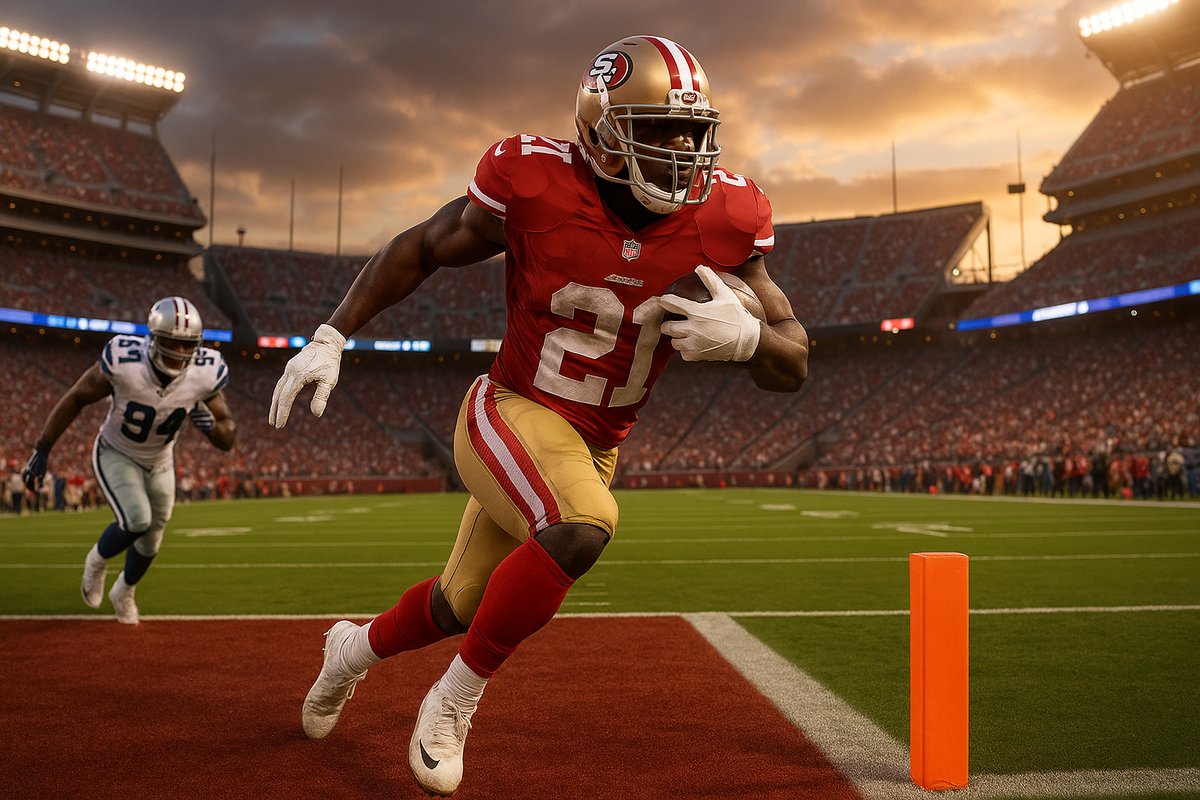
Breaking down the all-time NFL rushing leaders, you quickly realize these backs didn’t just rack up yards—they forced defensive coordinators to redraw every gap responsibility on the fly. When you’ve lined up in a defensive scheme, you understand how a patient runner like Emmitt Smith exploited even the slightest over-pursuit, turning cutback lanes into 18,355 career rushing yards over 15 seasons, mostly with the Cowboys. I’ve studied enough film to know his vision and balance let him surpass Walter Payton back in 2002, and that kind of durability still sets the standard when scouts evaluate draft prospects who need to hold up behind zone-blocking schemes.
Walter Payton sits right behind him at 16,726 yards with the Bears, a guy whose work ethic showed up on every snap as he carried teams through lean stretches. Frank Gore checks in third above 16,000 yards across multiple stops, including the 49ers and Dolphins, proving longevity that stretched two decades and showed how a back can adapt when the offensive line’s gap discipline starts to break down late in games.
Smith’s 1993 MVP season and three Super Bowl rings underline how these all-time leaders often become the anchor for championship squads. He punched in 164 rushing touchdowns, a red-zone presence that still jumps off the tape. Barry Sanders lands fourth with 15,269 yards in a run-heavy Lions offense that never gave him elite line support, yet he still made defenses pay with his one-cut explosiveness.
Rule changes and scheme evolution clearly shaped the totals you see here. Adrian Peterson’s 2,097-yard 2012 season with the Vikings remains one of those single-year outliers that makes you rewind the film just to see how he maintained burst through constant arm tackles. LaDainian Tomlinson added receiving production to his 13,684 rushing yards for the Chargers, creating mismatches that coverage schemes simply couldn’t account for. Later backs like Gore benefited from zone-blocking concepts that kept them productive well into their mid-30s.
Franchises that invested in stout offensive lines, like those 1990s Cowboys units, consistently produced multiple names on this list. Super Bowl history shows these rushers controlling the clock and wearing down fronts, exactly like Payton’s 1985 Bears squad that paired a punishing run game with elite defense.
Smith’s patient style meshed perfectly with that Hall of Fame-caliber line in Dallas, while Payton’s toughness let him play through injuries and set the leadership tone for the Bears. Modern standouts like Derrick Henry keep climbing with the Titans, blending size and speed in ways that echo the greats and force linebackers to respect both gap integrity and perimeter pursuit.
What separates the truly elite rushing backs from mere volume accumulators is efficiency paired with longevity. Looking at yards per carry, a metric that reveals how effective a runner was with each opportunity, Walter Payton’s 4.4 average stands out as exceptional for someone who carried the ball 3,838 times over a 13-season career. That consistency matters more than casual fans realize—sustaining that level of production while absorbing the physical toll of 300+ carries per season requires not just talent but an almost uncommon durability. Emmitt Smith’s 4.2 yards per carry across his massive 4,143 attempts shows how grinding out tough yards, even when the defense has you figured out, builds those career totals that eventually top the all-time list.
Rushing efficiency tells the story of how backs attacked defenses differently across eras. Barry Sanders’ ability to average 5.0 yards per carry despite lacking the support Smith enjoyed upfront demonstrates pure explosiveness—the kind of dynamic cut-back ability that forced defenses to respect boundary containment on every handoff. Adrian Peterson, Jamal Murray, and others from more recent years benefited from cleaner passing attacks that kept defenses honest, yet they still had to earn their yards against increasingly athletic linebacker corps and coverage-oriented safeties.
The trajectory of a rushing leader’s career often peaks in the 26-30 age range, where physical prime aligns with maximum experience reading blocks. Smith’s best seasons came in his late 20s when he’d absorbed enough knowledge to slide through gaps before they closed, while Gore’s ability to remain productive into his mid-30s became almost unprecedented. Durability comes from running lower to the ground, avoiding unnecessary hits, and understanding leverage—elements that separate backs who accumulate 10,000 yards from those who exceed 15,000.
Touchdowns and red-zone efficiency separate hall-of-fame caliber rushers from solid contributors. Emmitt Smith’s 164 rushing scores represents a touchdown roughly every 25 carries, a conversion rate that reflects his excellence between the 20-yard lines where defenses tighten coverage and get more aggressive. LaDailian Tomlinson’s 167 rushing touchdowns came partly from his role in a pass-happy Chargers offense, where he lined up everywhere—a versatility that modern offenses increasingly demand from their lead backs.
Contract structures and team loyalty shaped these careers too. Smith’s 15-year commitment to Dallas meant he could hit his peak years with continuity, the same offensive line, and a coaching staff that understood how to scheme for his strengths. Gore’s multiple stops—San Francisco, Indianapolis, Miami, and others—meant constantly adapting to new systems and adjusting to different line philosophies, yet he maintained productivity through sheer willpower and intelligence.
The modern era has seen rushing totals decrease partly due to offensive evolution favoring spread concepts and pass-heavy schemes. Backs entering the league today face fewer carries per game than their predecessors, meaning 15,000+ yard totals may become increasingly rare. Derrick Henry’s monster seasons with Tennessee proved that old-school downhill running still works when paired with modern efficiency, though even his trajectory slowed as the league’s approach to rushing fundamentally shifted.
Plenty of these leaders reached Super Bowls, using their skills to grind defenses down. Smith’s postseason work cemented his legacy, and Gore added to multiple playoff pushes even when the ultimate game stayed out of reach. That link between regular-season dominance and title contention runs through the entire list.
Key facts stay the same: Smith owns the record with 18,355 yards on 4,143 carries. Payton averaged 4.4 yards per carry across 13 seasons. Gore is the only back to hit 1,000 yards with five different teams. Sanders posted 10 seasons of at least 1,000 yards without ever reaching a Super Bowl. Peterson’s 2012 campaign still ranks among the top single-year efforts. Seven of the top 10 have Hall of Fame busts, and the top five combined cleared 80,000 career rushing yards.
Beyond raw statistics, these athletes shaped offensive philosophy for their franchises and influenced how coaches built personnel around elite runners. Smith’s success validated the Cowboys’ commitment to smash-mouth football through the 1990s. Gore’s longevity proved zone-blocking principles could extend careers. Today’s rushing leaders inherit lessons from these greats about running angles, pad level, and vision—fundamentals that transcend era changes.
These athletes didn’t just move the ball—they shaped how teams built identities around the ground attack and how defenses had to adjust every week. Their tape still teaches the value of resilience and scheme fit as new backs enter the league.