
Aaron Rodgers Record Breaking Seasons
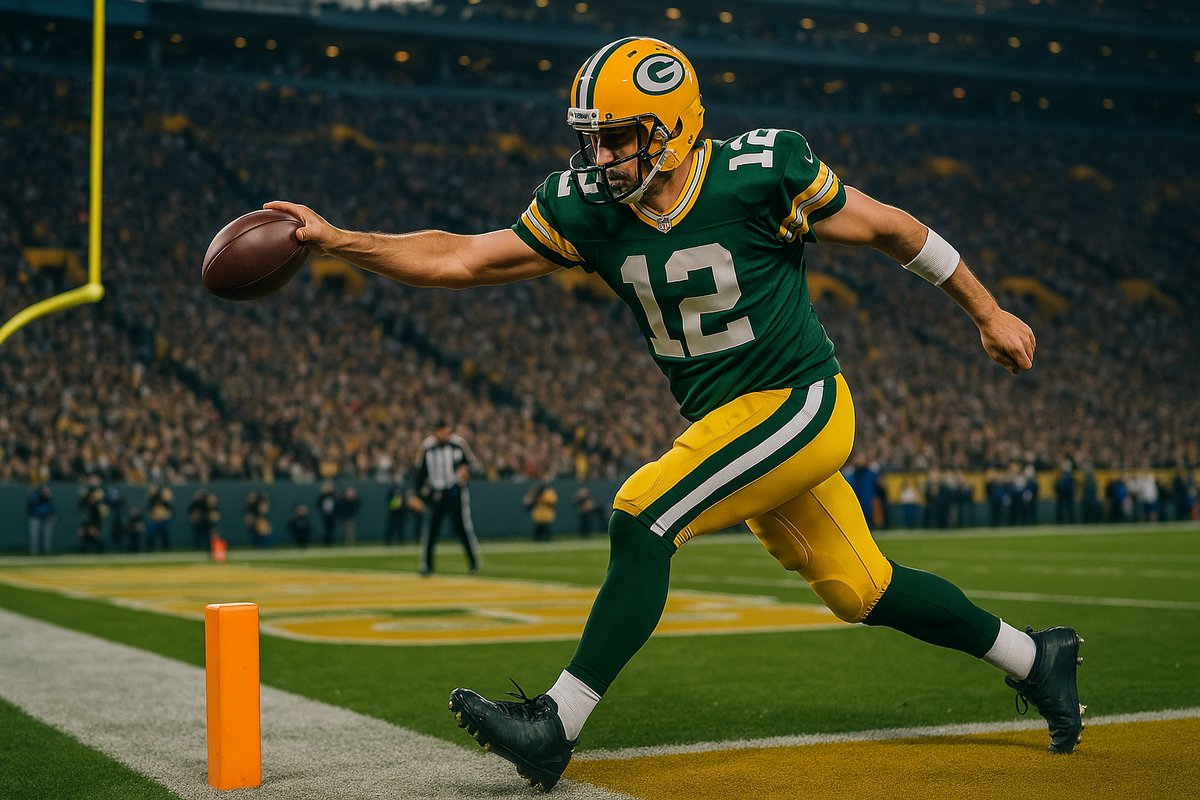
Aaron Rodgers’ record-breaking seasons have been must-watch tape for any defensive mind trying to crack the code on elite quarterback play. When you’ve lined up in a defensive scheme, you understand just how his quick release and elite arm talent force linebackers and safeties to play honest on every down. From his early days backing up Brett Favre to those MVP explosions, Rodgers has consistently made defenses pay for even the slightest gap discipline lapse.
He came into the league in 2005 with the Packers and spent three years learning behind Favre before taking the reins in 2008. That first full season he hit over 63 percent of his throws for 4,038 yards and 28 touchdowns, already showing the low-interception habits that would define him. I’ve studied enough film to know that minimizing turnovers the way he did early on isn’t just about stats—it’s about reading coverage schemes before the snap and getting the ball out before the rush collapses the pocket.
The 2008 campaign saw him clear 4,000 yards and get Green Bay back into the playoffs. His poise under center and deep-ball accuracy stretched defensive fronts, especially in NFC North slugfests where Mike McCarthy’s schemes gave him clean sightlines. Analysts back then noted his passer rating often sat above 90 even when facing the kind of pressure that usually rattles young quarterbacks.
The real explosion came in 2011, when Rodgers posted that league-record 122.5 passer rating. Forty-five touchdowns against just six picks, 4,643 yards, and a 15-1 regular season that ended with a Super Bowl XLV win over the Steelers. From a linebacker’s perspective, that season was a nightmare—his decision-making kept secondaries in conflict, and the Packers’ offensive line gave him just enough time to exploit every hole in coverage. That performance earned his first MVP and showed he could deliver on the biggest stage. The passer rating still stands as one of the most impressive single-season achievements in NFL history, and defensive coordinators spent the entire offseason game-planning around how to slow down that level of efficiency.
He repeated as MVP in 2014, completing 65.6 percent of his passes for 4,381 yards and 38 touchdowns. The mobility element stood out on film; he extended plays just enough to turn man coverage into scramble drills. Then came 2020 and another MVP, this time with 48 touchdowns and a 70.7 completion rate. Defenses had to keep adjusting their shells because Rodgers was still diagnosing pre-snap and audibling into the right looks. That third MVP award cemented his legacy as one of the few quarterbacks who could sustain excellence across different eras of defensive sophistication and rule changes.
Throughout his career, Rodgers has demonstrated an almost uncanny ability to navigate the nuances of coverage shells. His understanding of how safeties rotate, how corners adjust, and where the soft spots in zone coverage exist separates him from many of his contemporaries. The way he manipulates defenses with his eyes and subtle shoulder movements forces safeties to commit prematurely, creating throwing windows that shouldn’t exist. This level of football intelligence is something that can’t be taught in most quarterback academies—it’s developed through thousands of hours studying film and sitting in meetings where he learns to recognize defensive tendencies.
Even after moving to the Jets in 2023, he kept the completion numbers high and the turnovers low despite the roster around him. His career interception rate of 1.4 percent remains the lowest in league history across more than 5,000 attempts. That kind of efficiency changes how entire secondaries play—gap discipline tightens, but it also creates the mismatches that let skill players win one-on-one. The fact that he maintains this level of ball security while still pushing the ball downfield aggressively shows a mastery of risk management that separates great quarterbacks from legendary ones.
Looking at the statistical landscape of his career, Rodgers has thrown for over 4,000 yards in nine separate seasons, demonstrating remarkable longevity and consistency. His ability to perform at elite levels across two decades speaks to his dedication to conditioning, preparation, and continuous learning. The evolution of his game—from the young gunslinger who occasionally forced balls into coverage to the cerebral field general who orchestrates offenses with surgical precision—shows the growth trajectory of someone committed to excellence.
His record for consecutive games with at least one touchdown pass sits at 36, a streak that showcases his reliability in the red zone and his ability to create scoring opportunities consistently. This record underscores not just physical talent but the mental fortitude required to execute in high-pressure situations repeatedly. Defenses know they’re vulnerable to explosive plays when facing Rodgers, which forces them into predictable coverage shells that create advantages elsewhere on the field.
He led the Packers to that Super Bowl title while throwing for 304 yards in the game itself, earning Super Bowl XLV MVP honors and cementing his place among the all-time greats. That championship run demonstrated his ability to perform when everything is on the line and defensive schemes are at their most sophisticated. The pressure of the postseason and the adjustments that legendary defensive minds bring couldn’t diminish his effectiveness.
Beyond the statistics, Rodgers has earned ten Pro Bowls and multiple 4,000-yard seasons, with the 4,643-yard 2011 campaign still the high-water mark. His selection to the Pro Bowl reflects not just the volume of his production but the consistency with which he performs at an elite level. When you examine the complete body of work across 18 seasons, the durability becomes apparent—avoiding significant injuries while maintaining statistical excellence is a feat unto itself.
One often overlooked aspect of Rodgers’ game is his ability to perform in adverse weather conditions. Green Bay’s Lambeau Field presents unique challenges with wind and cold, yet Rodgers has consistently posted strong numbers in December. His deep ball trajectory and arm strength allow him to fit passes into tight windows despite meteorological obstacles that challenge other quarterbacks. This expertise in outdoor football separates regional excellence from universal mastery.
Rodgers’ body of work is a master class in blending physical tools with football intelligence. From Green Bay’s championship run through his later stops, the numbers and the leadership have shaped how teams build around the position. Draft prospects still study his tape to see how pre-snap recognition and timing can beat even the most disciplined coverage schemes. His influence on quarterback development extends beyond his direct competition—young quarterbacks in the league model their preparation and on-field approach after his example.
The legacy of Aaron Rodgers’ record-breaking seasons extends beyond individual accolades. He’s redefined what’s possible from the quarterback position in terms of efficiency and consistency, setting a standard that future generations will measure themselves against. His combination of arm talent, mobility, intelligence, and work ethic creates a template for quarterback excellence that transcends era-specific differences.