
Aaron Rodgers Most Impressive Statistical Seasons
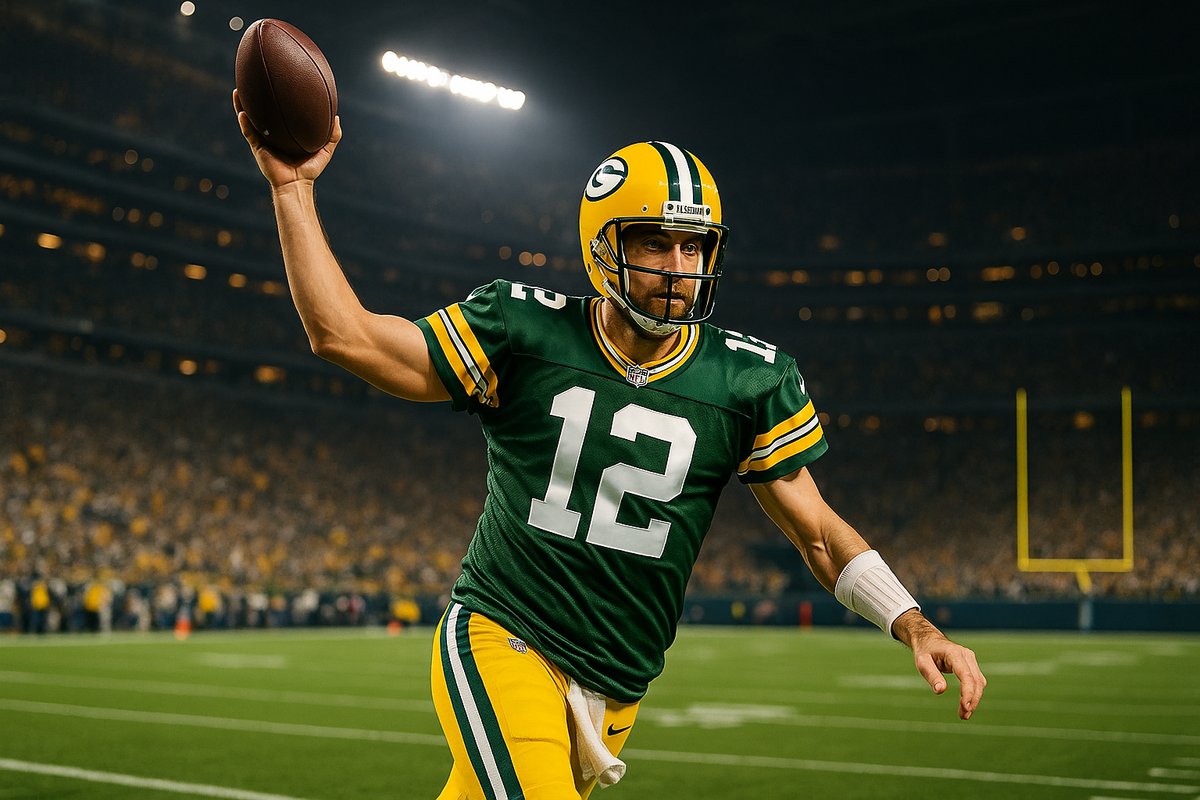
Aaron Rodgers has put together some of the cleanest tape you will ever break down, and when you have lined up in a defensive scheme yourself you understand just how rare that kind of sustained precision is. I have studied enough film to know the difference between a quarterback who is simply completing passes and one who is dissecting coverage shells while keeping his pads square and his eyes downfield. These are the seasons that separate him from the rest of the pack.
In 2011 Rodgers carved up secondaries at a level that still shows up on every draft prospect reel when coaches want to illustrate elite anticipation. He finished with 45 touchdowns, a 68.2 completion rate, 4,643 yards, and a 122.5 passer rating while throwing just six picks on 502 attempts. That 1.2 percent interception rate told you everything about his ball security and pre-snap recognition. The Packers offense averaged 35.9 points a game because Rodgers was hitting the deep seams and letting play-action do the rest. His Total QBR sat at 85.4 and he posted 9.0 adjusted net yards per attempt, numbers that reflect how little he was giving defenses free shots.
What made 2011 truly exceptional was the context in which it happened. Rodgers was in his first season as a full-time starter, having spent his first three years backing up Brett Favre. The fact that he came out of the gate with that level of execution and consistency speaks volumes about his preparation and mental processing. He led the league in passer rating by a significant margin that season and won the NFL MVP award, becoming one of the youngest quarterbacks ever to capture the honor. The Green Bay offense was electric, ranking second in the league in scoring and establishing an identity that would define the team’s success for years to come. Rodgers’ ability to push the football down the field while maintaining such a low interception rate forced defensive coordinators around the league to adjust their safety coverages, which in turn opened up running lanes and created explosive plays in the passing game.
Fast-forward to 2020 and you saw even tighter mechanics and decision-making. Rodgers posted a career-best 121.5 rating, went 70.7 percent for 4,299 yards, and threw 48 touchdowns against only five interceptions. The 0.9 interception rate was the lowest of his career. He converted 35 of 42 red-zone trips into touchdowns and kept his sack rate at 3.8 percent, which tells you he was sliding his feet and climbing the pocket like a veteran who had seen every blitz pattern imaginable. Green Bay finished first in scoring and third in total yards while locking up the NFC’s top seed.
The 2020 season represented the culmination of Rodgers’ refinement as a quarterback. At 36 years old, he was playing some of the best football of his career, which defied conventional wisdom about quarterback decline. His accuracy was surgical, his decision-making was near-flawless, and his chemistry with receivers like Davante Adams had reached a peak that made them nearly impossible to defend in critical moments. The fact that he threw only five interceptions across a full 16-game season while attempting over 500 passes is a statistical anomaly that belongs in the same conversation as the greatest quarterback performances of the modern era. His ability to minimize negative plays while still taking shots down the field created a perfect storm for opposing defenses. Additionally, Rodgers’ rushing statistics in 2020 showed he picked up crucial first downs with his legs when necessary, contributing 104 rushing yards and three rushing touchdowns that season.
The 2014 season gave us a nice blend of both styles. Rodgers threw for 4,381 yards and 38 touchdowns at a 112.2 rating, and the tape shows him making the same tight-window throws we still teach young prospects today. He also had strong efficiency years in 2009 and 2012, each time posting ratings above 108.0 and leading the league in key categories while keeping his yards-per-attempt numbers elite. The 2014 campaign was particularly memorable because it showcased Rodgers’ versatility in managing different types of game situations. He was equally comfortable in quick-hitting slant routes as he was in holding the ball for seven-step drops down the field. The Packers reached the NFC Championship Game that year, and Rodgers’ steady hand throughout the playoffs demonstrated that his regular season success translated directly to big moments.
Beyond the statistical highlights, what separated Rodgers’ peak seasons was his ability to elevate his teammates. Receivers who played with him during these stretches consistently talked about how his precision and timing forced them to run their routes with exactness. There was no room for approximation; if the route concept called for a break at 12 yards, that’s where Rodgers would place the football. This standard of excellence rippled throughout the entire offense and created a culture of precision that made Green Bay one of the most efficient scoring machines in football during these windows.
Rodgers’ approach to pre-snap reads also deserves examination. In the best seasons, he would manipulate defenses with his eyes and cadence changes, often causing safeties to rotate at the snap in ways that opened up his primary reads. This skill isn’t reflected in any traditional statistic, but film study reveals how often he was getting exactly what he wanted before the ball was even snapped. His understanding of spacing and leverage allowed him to exploit single-high safety looks with consistency that elite receivers dream about.
The consistency of his mechanics during these peak years was also noteworthy. Rodgers maintained a release point that was nearly identical from snap to snap, which allowed receivers to time their breaks with precision. His footwork in the pocket remained compact and efficient, never wasting motion or taking unnecessary steps that might alter the timing of his throws. This mechanical consistency, combined with his athletic ability, created a combination that was nearly impossible to game plan against.
When you stack these campaigns side by side, 2011 jumps out for sheer volume, 2020 for efficiency and turnover avoidance, and 2014 for the balanced production that carried Green Bay to the NFC Championship Game. Across those peaks he earned four Pro Bowl nods and multiple first-team All-Pro honors, plus two MVP awards. The red-zone touchdown conversion rate stayed above 80 percent in those years because he understood how to manipulate spacing and exploit single-high looks.
Examining the specific red-zone efficiency during these seasons reveals another layer to Rodgers’ excellence. In confined spaces where margin for error is minimal, he excelled at diagnosing coverage adjustments that defensive coordinators made near the goal line. Whether it was a slant on third-and-goal or a fade route to his primary weapon, Rodgers’ accuracy in the red zone was almost unguarded. His ability to fit passes into tight windows without forcing the issue kept interception rates remarkably low even when operating in high-leverage situations.
The influence of his supporting cast also played a role in these seasons, but it’s important to note that Rodgers’ excellence elevated those around him rather than being merely a product of talent. In 2011, he worked with a receiving corps that included Jordy Nelson, Greg Jennings, and James Jones—all quality receivers, but none were considered elite at the time. By 2020, Davante Adams had established himself as an elite target, yet Rodgers still managed to spread the ball around effectively and maintain his efficiency even in games where Adams was covered tightly.
Key numbers to remember:
– 2011: 45 touchdown passes, 122.5 passer rating, 6 interceptions
– 2020: 48 touchdown passes, 70.7 completion percentage, 5 interceptions
– 2014: 4,381 passing yards, 112.2 passer rating, NFC Championship appearance
– Career-low 0.9 interception rate in 2020
– Multiple 4,000-yard, 35-touchdown seasons
– Two-time NFL MVP with elite efficiency across the board
– Red-zone touchdown conversion above 80 percent in his peak windows
– 9.0+ adjusted net yards per attempt in best seasons
– Maintained sack rates below 4 percent during peak performance years
Rodgers’ best work always came down to the same traits: elite pocket presence, pre-snap recognition, and the ability to stay on schedule even when the rush got home. Those seasons set the standard that every quarterback coming through the draft now gets measured against. When scouts evaluate young arms, they’re looking for the type of anticipatory throws Rodgers made routine, the type