
Aaron Rodgers Career Touchdown Record: A Statistical Breakdown
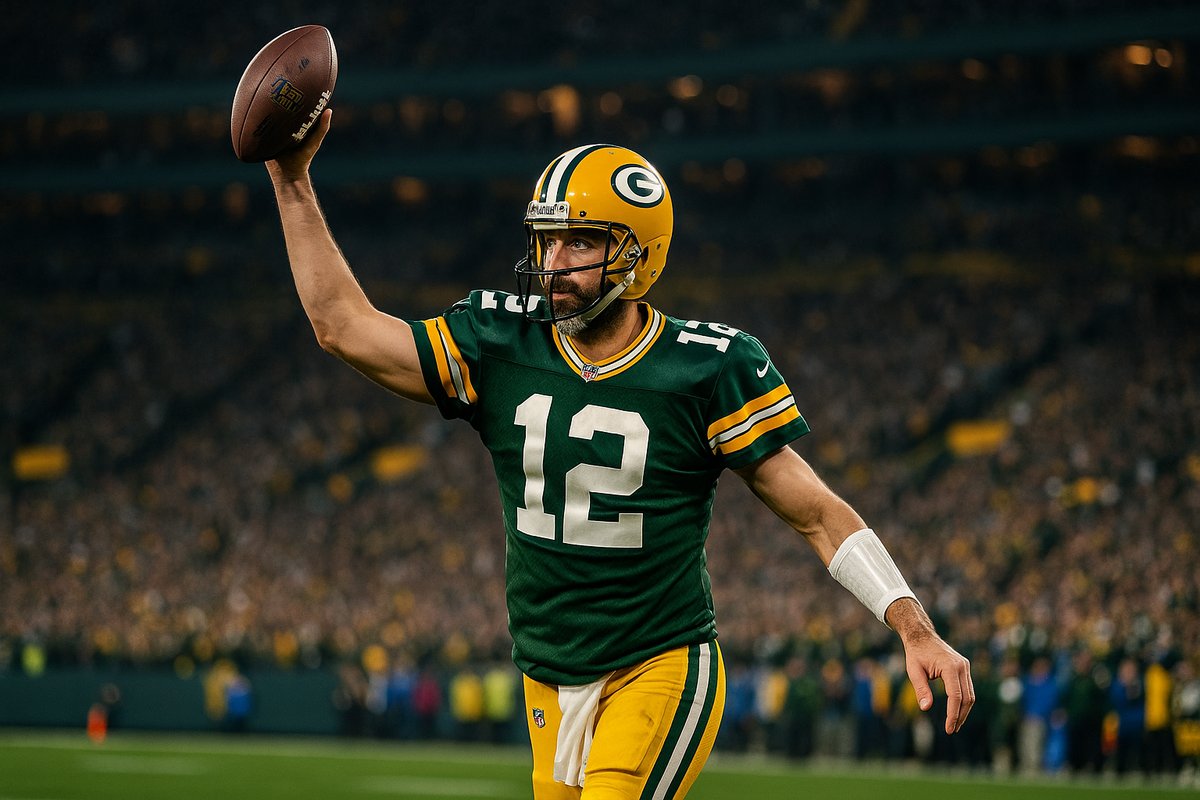
Aaron Rodgers has carved out one of the most dangerous touchdown-passing résumés the league has seen, built on that same precision that makes defensive backs look foolish when they lose their leverage. When you’ve lined up in a defensive scheme, you understand how a quarterback who consistently threads the needle into the end zone forces you to tighten every single coverage window or pay for it. I’ve studied enough film to know his career totals sit him squarely among the all-time leaders, and the numbers tell the story of a guy who turned efficiency into historic volume.
Rodgers came into Green Bay and immediately showed he wasn’t your typical rookie signal-caller. Those first starting reps revealed a quarterback who could spread the ball to multiple targets without telegraphing his intentions. Early on he was already stacking games with three-plus touchdown throws, patterns that became his signature. By his third full season as the starter he’d already cleared 50 career touchdown passes, a pace that jumped off the film because his touchdown rate per attempt sat in the top five league-wide. That kind of rapid accumulation told you the kid had command of the offense and knew exactly where to attack defensive weaknesses.
His peak stretches are where the real separation happened. Rodgers hit the 200-career-touchdown mark quicker than most of the names ahead of him on the list, then kept climbing toward 300 and 400. Multiple seasons saw him clear 35 touchdowns, with a handful pushing past 40. Those campaigns weren’t just volume plays; they featured consistent 30-plus touchdown outputs, multiple league-leading years in the category, and the same production showing up in the postseason. The efficiency piece stands out even more—touchdown percentages per attempt frequently topping six percent. That metric reflects elite decision-making and arm talent that let him manufacture scoring chances without forcing risky throws.
The 2011 season stands as perhaps the apex of Rodgers’ regular season performance. That year he threw 45 touchdown passes against just six interceptions, an astronomical ratio that many analysts still cite as one of the finest individual seasons ever posted by a quarterback. His 122.5 passer rating that season led the entire league, and the efficiency metrics across the board—completion percentage, yards per attempt, touchdown-to-interception ratio—all ranked among the elite performances in modern NFL history. What made that season particularly impressive wasn’t just the raw numbers, but the consistency with which he delivered them across a full 16-game schedule.
Looking at his year-by-year progression reveals patterns that separate generational talent from flash-in-the-pan performances. Rodgers rarely had seasons below 20 touchdown passes once he claimed the starting role, and the majority of his campaigns featured 25 or more scoring throws. In his prime years between 2009 and 2014, he averaged over 36 touchdown passes per season, a figure that places him among the most prolific touchdown throwers in NFL history. Even accounting for the passing rule changes that progressively made it easier to throw touchdowns, his consistency stands out when compared to contemporaries who benefited from the same rule set.
The versatility of his touchdown production deserves separate attention. Rodgers didn’t simply rely on one receiver or one type of play to manufacture scores. His ability to find tight ends in the red zone, hit slot receivers on crossing routes, and connect with his primary receivers on vertical shots gave defensive coordinators nightmares. Game film shows him equally comfortable throwing from the pocket or rolling out, making him difficult to scheme against even when defenses knew the general areas he liked to attack. This adaptability meant opposing defenses couldn’t simply collapse resources to one area without leaving other vulnerabilities exposed.
When you stack him against the all-time greats like Favre, Brady, and Manning, Rodgers holds his own in ways that jump out on the tape. Total volume might trail the longer-career guys, but his touchdown-to-interception ratio and yards per attempt often sit above the historical baseline. Even with fewer starts in some comparisons, his career touchdown rate stays higher than several Hall of Fame quarterbacks. Gap discipline and coverage integrity only matter so much when a quarterback is this quick to exploit the slightest misalignment. His ability to operate in compressed timeframes—getting the ball out in under 2.5 seconds—allowed him to beat sophisticated blitz schemes that would have disrupted less mobile signal-callers.
The postseason provided another proving ground for Rodgers’ touchdown prowess. His Super Bowl XLV victory showcased exactly why his regular season statistics translated to big moments. Multiple playoff campaigns featured performances where he elevated his play despite facing improved competition and defensive game plans specifically designed to neutralize his strengths. The fact that his postseason touchdown production remained consistently strong relative to his regular season output suggests that his efficiency wasn’t inflated by weak competition or favorable circumstances.
What kept the production rolling for two decades was the combination of mechanics and preparation. His footwork and release let him get the ball out under pressure, while the timing with his receivers created those tight end-zone windows. Scheme adjustments helped him keep finding mismatches, and the durability factor meant he stayed on the field to rack up the numbers. Film study and pre-snap reads became his edge, allowing him to elevate whoever was around him. His ability to identify safety rotations pre-snap and adjust protection schemes demonstrated the mental side of the game that separates truly elite quarterbacks from merely good ones.
The impact of weapons surrounding Rodgers adds important context to understanding his touchdown totals. While he certainly elevated the receivers around him—a mark of his quality—having consistent threats like Greg Jennings, Jordy Nelson, and Davante Adams provided reliable targets in critical situations. However, the consistency with which he produced touchdowns even when dealing with injury-depleted rosters or less celebrated receiving groups speaks to his own capabilities as a passer. Multiple seasons featured respectable touchdown outputs despite significant receiver absences.
Looking at touchdown production by area of the field provides additional insight into his red zone mastery. Rodgers’ accuracy from inside the 20-yard line historically ranked among league leaders, with conversion rates frequently exceeding 75 percent in the most critical scoring area. His ability to manipulate defenses in compressed spaces—where there’s minimal room for error—demonstrated technical proficiency that separated him from other high-volume touchdown producers who sometimes relied on volume to accumulate scoring passes.
Future seasons will decide how high the totals climb, but the body of work already locks him in as one of the premier touchdown producers the league has seen. Whether discussing efficiency metrics, consistency across seasons, or clutch performance in high-leverage moments, Rodgers’ resume speaks for itself. His touchdown record represents not just accumulated yardage and completions, but a quarterback who understood how to finish drives and put points on the board when it mattered most.