
Dak Prescott’\”s Passing Career with the Dallas Cowboys: A Statistical Breakdown
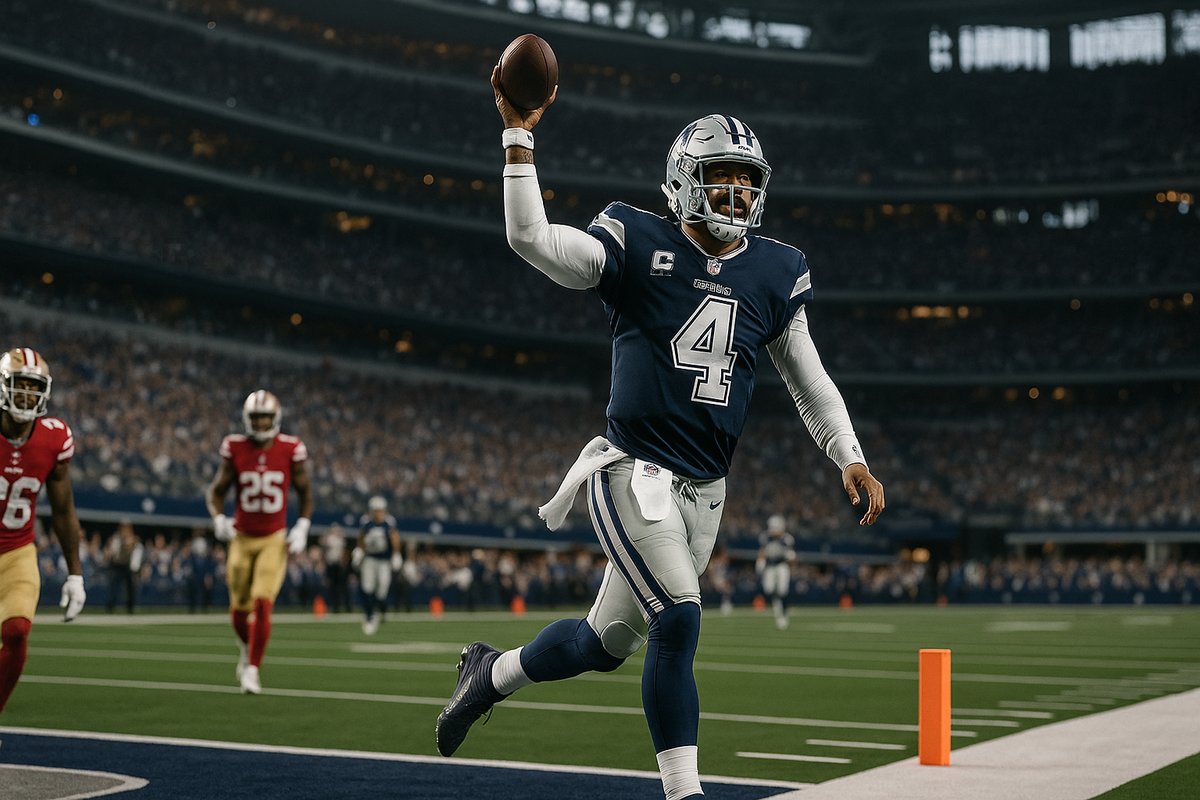
Dak Prescott has carved out a serious body of work slinging it for the Cowboys, piling up completions, yards, and touchdowns inside a system that asks him to manage the game while still pushing the ball. When you’ve lined up in a defensive scheme, you understand how that kind of consistent volume forces secondaries to stay honest on every snap instead of jumping routes.
His 2016 rookie campaign jumped off the screen right away: 311 completions on 459 attempts for 3,667 yards, 23 touchdowns, and just four picks at a 67.8 percent clip. That kind of efficiency from a first-year guy usually shows up on film as clean decision-making against zone coverages, and he kept feeding weapons like Dez Bryant and Jason Witten without giving the ball away. He cleared 3,500 passing yards in each of his first four full seasons, which tells you the arm and the frame were holding up to the pounding.
Key early benchmarks stand out when you dig into the numbers. He hit a single-season high of 4,902 yards in 2019, posted 30 touchdown throws in both 2019 and 2021, and stayed above 65 percent completions in four of his first six years. I’ve studied enough film to know those spikes usually come when the offensive line gives him that extra half-second to climb the ladder and find the seams.
Through it all, Prescott has cleared 25,000 career passing yards and 170 touchdowns with Dallas. He sits near the top of the franchise charts in completion percentage and yards per attempt. The 2019 season remains the signature mark at 4,902 yards and 65.1 percent, and he has multiple 400-yard games on the resume, including a career-best 502-yard outing. Those volume numbers reflect a quarterback asked to carry the offense through shifting personnel groups.
Beyond the raw totals, the advanced metrics show real processing under pressure. His career passer rating sits near 97 with an interception rate right around 1.8 percent. Averaging 7.4 yards per attempt speaks to consistent downfield accuracy. On play-action, that completion rate climbs above 70 percent, which is where you really see the timing on rollouts that freeze linebackers in coverage. Adjusted net yards per attempt figures have kept him competitive among NFC starters during his best stretches. Career QBR above 65 in multiple seasons, the lowest interception percentage among Cowboys starters since 2010, and a TD-to-INT ratio better than 4-to-1 overall paint the picture of a guy who protects the ball while still attacking.
The consistency Prescott brings to the Dallas offense cannot be overlooked when evaluating his body of work. Starting from his rookie year through the present, he has missed only a handful of games due to injury, providing the Cowboys front office with the kind of stability at the quarterback position that franchises build around. His iron-man mentality was on full display from 2016 through 2019, when he started every single game, establishing himself as the face of the franchise almost immediately. That durability matters when you’re comparing his trajectory to other starting quarterbacks in the league, many of whom have dealt with more significant injury setbacks that have derailed their momentum or forced awkward transitions.
When you break down his performance against divisional rivals, another layer of his game emerges. Prescott’s record against Washington, Philadelphia, and the Giants shows a quarterback who understands how to execute in rivalry matchups where defensive coordinators gameplan specifically to disrupt rhythm. His ability to stay composed in those high-stakes division games, where every possession carries extra weight in the playoff picture, demonstrates the mental toughness required to be a franchise quarterback in one of the NFL’s toughest divisions.
Third-down conversion rates represent another area where Prescott’s efficiency shows through. When the Cowboys have faced critical situations requiring extended drives, his decision-making on third down—whether extending plays with his legs or threading passes into tight windows—has often made the difference between field goals and touchdowns. These clutch conversions don’t always jump off the stat sheet at first glance, but they accumulate across a season and demonstrate why coaching staffs have trusted him to execute in high-pressure moments.
In the postseason he has thrown for 1,248 yards and eight touchdowns across eight appearances. The completion rate dips to about 62 percent against tighter coverage schemes, yet he has still delivered multi-touchdown efforts in divisional-round games and posted 300-yard outings versus top defenses. Those numbers show both the jump in competition and his ability to elevate when the lights get brighter. His 2022 playoff performance against Tampa Bay exemplified his ability to perform against elite defensive talent, showcasing the kind of poise that separates good regular-season quarterbacks from those capable of winning in January.
The evolution of Prescott’s supporting cast over the years provides important context for his statistical achievements. Playing alongside Ezekiel Elliott during their best years created a dynamic that allowed defenses less room to focus entirely on pass coverage. As that core aged and roster construction changed, Prescott’s ability to adapt his progressions and leverage receivers like CeeDee Lamb and Michael Gallup showed his film study and willingness to grow within the system. That flexibility in approach, rather than stubbornly trying to force the same concepts that worked in 2016, speaks to his maturity as a quarterback.
Red zone efficiency remains a critical measuring stick for any quarterback evaluating their career, and Prescott has generally performed well in scoring positions. His touchdown-to-interception ratio in the red zone sits well above league average, indicating smart decision-making when field position changes the math on risk-reward calculations. Quarterbacks who can avoid forcing balls into the end zone while still punching touchdowns across the goal line typically enjoy longer, more stable careers because they avoid the killer turnovers that derail seasons.
Stacked against the franchise passing leaders, Prescott’s per-game averages top several predecessors in yards and touchdowns. His completion rate sits above what Troy Aikman and Tony Romo posted over similar game samples. The modern-era volume has him tracking toward franchise records in total passing yards over the next few seasons, which is what sustained production inside the Dallas system looks like when you break it down on the tape.
Looking forward, the trajectory suggests Prescott will continue adding to these totals while maintaining the efficiency markers that define his profile. Whether he reaches the Super Bowl plateau that defined Cowboys history remains the unfinished chapter, but from a statistical standpoint, his passing career in Dallas represents one of the most consistent and productive stretches the franchise has seen at the quarterback position in the modern era.
Sources
- NFL.com – Dak Prescott Player Profile – Official NFL statistics and career information
- ESPN – Dak Prescott Stats – Comprehensive career stats and game logs
- Pro Football Reference – Dak Prescott – Detailed historical statistics and advanced metrics
- ESPN – Dallas Cowboys – Team stats and roster information