
Lamar Jackson: The Record-Setting Running Quarterback Redefining NFL Offense
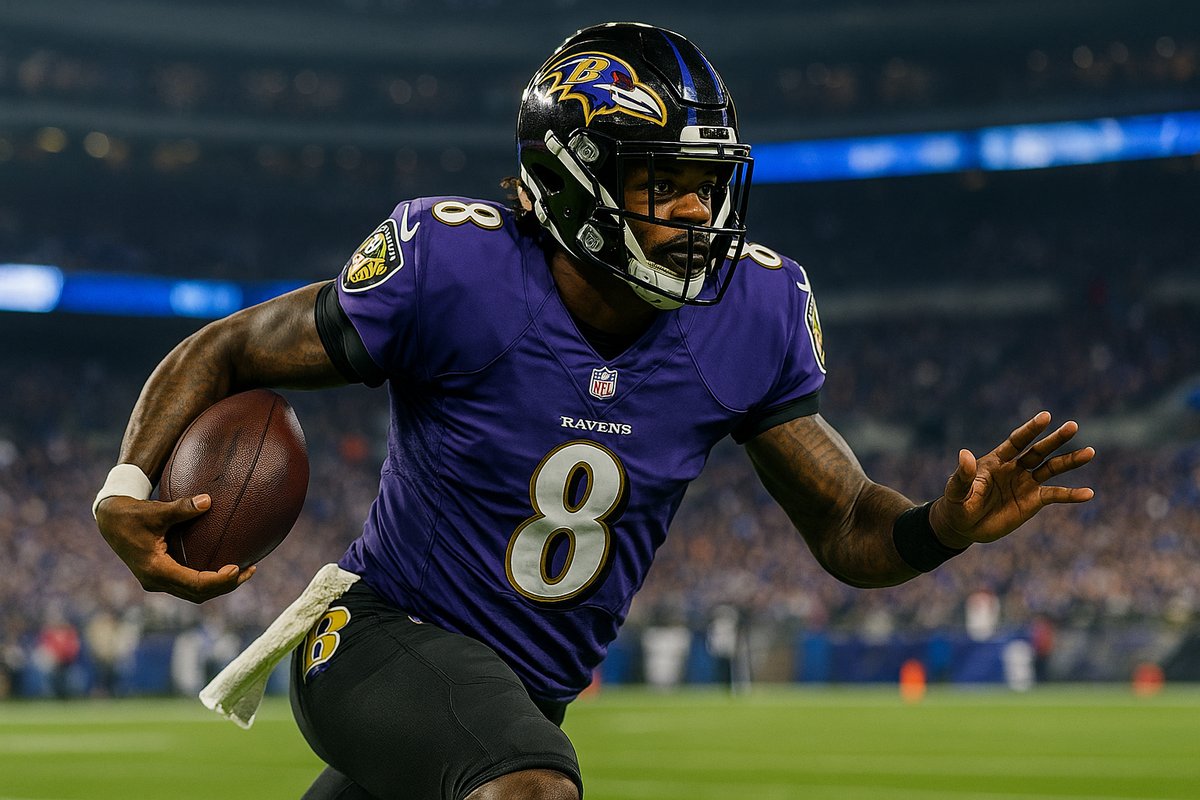
Lamar Jackson isn’t just a dual-threat quarterback—he’s the clearest proof yet that the position has permanently shifted toward players who can tilt a defense with their legs as much as their arm. His combination of designed runs, scrambles, and read-option execution has forced every front office to recalculate how much they’re willing to pay for that extra dimension. Baltimore has already locked him into a long-term deal that reflects exactly that market shift, and the ripple effects are showing up in draft rooms across the league.
His 2019 season still stands alone: 1,206 rushing yards, the single-season record for any quarterback. What’s more impressive is the sustainability—he’s followed that up with multiple 900-yard campaigns, showing the production isn’t a one-year spike. Those seasons have featured consistent per-carry averages above 5.5 yards, heavy usage of designed quarterback runs that stress defensive fronts, and an unusually low rate of negative plays because his sack avoidance often turns into positive yardage on the ground.
From a fantasy perspective, that volume turns Jackson into a weekly cheat code. The rushing floor he provides is unmatched at the position, and when he’s healthy the spike weeks can single-handedly win leagues. League-wide, though, the bigger story is how his numbers have changed contract negotiations. Teams now see a clear path to franchise-quarterback money for players who can also deliver 800-plus rushing yards without derailing the passing attack.
Career-wise, Jackson has already cleared 4,800 rushing yards and 35 rushing touchdowns as a quarterback, numbers that put him in rare air among active signal-callers. Advanced metrics like rushing yards over expected routinely rank him alongside or ahead of traditional running backs in similar situations. In the playoffs he’s shown the same ability to move the chains, with multiple 100-yard postseason games that have flipped divisional matchups.
What the front office is really thinking here is how to keep that production without burning the player out. Baltimore’s approach—mixing designed runs with his natural scramble ability while protecting him in the pocket—has become the model other teams are trying to copy. His rushing success rate on designed plays sits above 55 percent, his scramble rate produces first downs at an elite level, and his expected points added per rush often beats what most running backs generate in comparable spots. Add in elite yards after first contact and strong EPA on zone-read concepts, and you see why the archetype has changed.
Compared with earlier dual-threat stars like Michael Vick or Randall Cunningham, Jackson’s edge is consistency and volume across multiple seasons rather than isolated explosions. Vick had the big-play ability but not the year-to-year durability Jackson has shown. Cunningham operated in a different era with different defensive structures. Jackson’s ability to stay above 60 percent completion while still threatening 1,000 rushing yards in a single season has created a new template that front offices are now actively hunting in the draft and free agency.
The mechanics that make Jackson elite at this hybrid role deserve closer examination. His footwork in the pocket remains disciplined despite the constant threat of scramble situations. He doesn’t freelance into chaos—he reads through progressions, and when the structure breaks down, his legs become the escape valve rather than the first option. This controlled approach to dual-threat quarterbacking is what separates him from earlier examples who treated scrambles as the default. Coaches have instilled a hierarchy: look downfield first, then attack the edge if opportunity presents itself.
Jackson’s MVP season in 2019 included 36 passing touchdowns alongside those 1,206 rushing yards, a combination that had never been remotely close before. The following season he maintained similar efficiency while slightly reducing volume, suggesting the production was repeatable, not a fluke born from an unusual confluence of circumstances. What’s particularly notable is how defenses adjusted—teams couldn’t simply stack the box because his arm talent kept them honest. That balance is the key to long-term sustainability at the position.
The Ravens’ offensive scheme under coordinator Todd Monken has evolved to maximize Jackson’s strengths while minimizing injury risk. This means strategic placement of designed runs at moments when defenders are most tired or least prepared, rather than running them indiscriminately. It means quick-hitting passes that let him use his athleticism in the throwing motion. It means occasional goal-line carries where the upside is tremendous and the contact is controlled. This thoughtful usage pattern is what teams looking to replicate Jackson’s success are most eager to steal.
In the modern NFL draft, teams are actively scouting for the next Lamar Jackson. That means searching for signal-callers with his athletic profile but earlier in their development. Players like Jalen Hurts, Josh Allen in his early years, and Kyler Murray all fit dimensions of this mold. What’s changed is that front offices no longer view arm talent and mobility as competing priorities—they view them as complementary traits that belong on the same resume. The quarterback who can’t move is now viewed as incomplete, and the one who can’t throw accurately is equally limited.
Defensive coordinators have had to completely rebuild their approaches to account for this archetype. Extra gap integrity on the edge, different linebacker responsibilities, safeties playing differently on read-option concepts—it’s rippled through every layer of defensive philosophy. Teams that figured it out first gained competitive advantages; those that haven’t are still scrambling to adjust. The best defenses have found ways to make Jackson uncomfortable in the pocket while also taking away the scramble lanes, but that’s genuinely difficult to accomplish on a weekly basis.
Jackson’s leadership style has also quietly shaped how the league views dual-threat quarterbacks. He’s not viewed as a highlight-reel artist or a freelancer—he’s a professional who studies film obsessively and demands excellence from teammates. That credibility matters when it comes to landing premium free agents and maintaining locker-room respect. Teams are now looking for that same mentality when they scout mobile quarterbacks, understanding that the physical tools mean nothing without the mental discipline to use them correctly.
The injury risk conversation around Jackson deserves honest treatment as well. Defenses are incentivized to target mobile quarterbacks differently, and volume is always a concern when a player gets 40-plus rushing attempts per season. However, his injury history has been relatively clean compared to earlier mobile QBs, and the Ravens’ usage model appears to be finding the sweet spot between maximizing production and managing risk. That delicate balance is something every team paying a mobile quarterback will need to navigate.