
High School Football: The Foundation of American Football Excellence
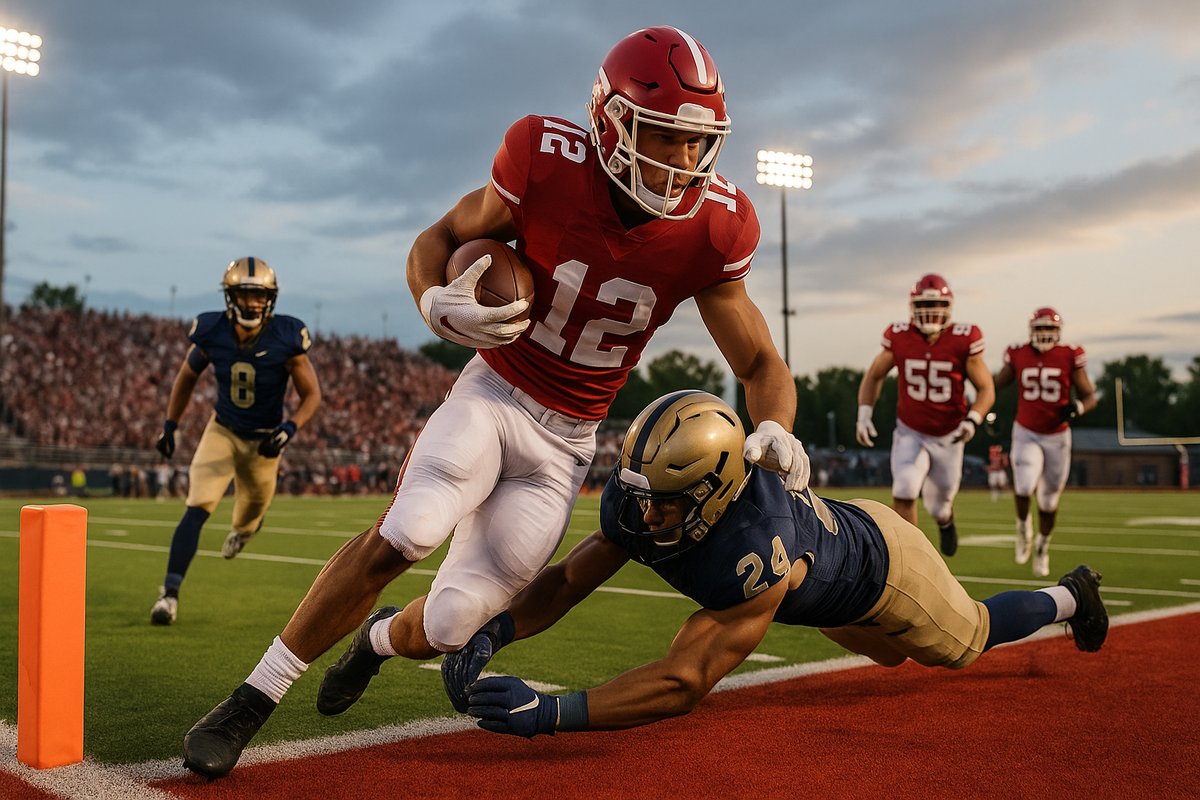
High school football is where the real foundation gets poured for every draft prospect who eventually steps into an NFL locker room. When you’ve lined up in a defensive scheme, you understand how those Friday nights teach gap discipline before any college coordinator ever draws it up on the board. Nearly a million kids suit up each September, turning the sport into the true pipeline that feeds college rosters and eventually the pros.
The numbers tell the story. NFHS data shows over a million participants every year, making football the biggest boys’ sport in American high schools. Classifications from 1A through 6A keep things balanced by enrollment, so smaller schools still produce guys who test well at the next level. States like Texas, California, Florida, and Ohio keep pumping out the talent density that scouts chase all season.
Recruitment starts with the film. College coaches break down high school tape the same way I study draft prospects—looking for consistent technique, decision-making under pressure, and how a kid plays within his scheme. Combine numbers matter too: 40 times, verticals, bench reps, and those position-specific measurables like arm length and hand size. Academics count just as much—GPA and SAT/ACT scores lock in NCAA eligibility. Character checks from coaches round it out. Power Five programs pull the elite prospects, while Group of Five and FCS schools find value in others who fit their systems.
Texas programs like Allen and Southlake Carroll build reputations that travel nationwide. California’s De La Salle and Long Beach Poly load up rosters that look like college depth charts. Florida’s year-round weather turns out defensive backs and edge rushers who already understand coverage responsibilities. Ohio, Pennsylvania, and Georgia keep the pipeline full with the same intensity.
The recruitment landscape has shifted dramatically over the past decade. With the rise of social media and specialized camps like The Opening and Elite 11, high school athletes now have unprecedented platforms to showcase their talents. Scouts attend these elite showcases specifically to evaluate top talent, and a standout performance can elevate a player’s recruitment status overnight. However, scouts also understand that camp performance doesn’t always translate to game film consistency. That’s why film evaluation remains the gold standard—it shows how a player performs when it counts, against quality competition, under the pressure of Friday night lights.
Coaches at this level do more than call plays. They hammer fundamentals through repetition, build conditioning that prepares kids for the jump in size and speed, and keep academic oversight tight so eligibility stays intact. I’ve studied enough film to know the difference between a prospect who was coached well in high school versus one who had to learn everything later. The quality of coaching at the high school level varies significantly across programs. Elite programs invest in strength and conditioning coaches, position specialists, and offensive/defensive coordinators who understand modern schemes. These programs often have resources that rival some college programs, with state-of-the-art facilities, video analysis systems, and comprehensive player development plans.
One often overlooked aspect of high school football is the medical and injury prevention infrastructure. Top programs employ athletic trainers who work year-round with athletes on conditioning, injury prevention, and rehabilitation. The importance of this cannot be overstated—an injury suffered in high school can derail a player’s entire college recruitment trajectory. Programs that prioritize player health and longevity show scouts that they’re developing young men responsibly, which reflects positively on the entire organization.
Modern programs track the same efficiency metrics you see at higher levels—yards per play, third-down conversions, red-zone scoring, turnover rates. Those numbers give scouts context when they evaluate raw production against competition. The academic side stays locked in too, with study halls and tutoring making sure GPA and test scores meet the bar for college ball. Digital recruiting platforms now allow coaches to track academic progress in real-time, and many programs have mandatory minimum GPA requirements to participate in spring ball or strength and conditioning workouts. This integration of academics and athletics at the high school level mirrors what happens in college and pros—it’s a habit-building exercise that prepares kids for the dual demands of student-athlete life.
The recruiting timeline itself has evolved significantly. In years past, most recruiting happened senior year. Now, serious programs are evaluating eighth and ninth graders, building relationships that extend over four years. This extended timeline allows scouts to see how physically mature players become and whether they maintain their competitive edge throughout high school. It also puts enormous pressure on young athletes to perform at elite levels when they’re barely teenagers. Programs that handle this responsibly—those that develop kids gradually rather than burning them out—tend to produce more durable college and NFL players.
Transfer portal activity now extends to the high school level as well. Athletes can change schools mid-career for better coaching, stronger competition, or academic opportunities. This has created a more competitive recruiting environment, where even strong programs must continuously prove their value to retain elite talent. When a top prospect transfers to your school, it signals to other recruits that your program is a destination worth choosing.
The real lessons stick with these kids long after the pads come off. Teamwork, resilience after losses, work ethic in the weight room, leadership from the captains—those traits separate the guys who last in the league from the ones who flame out. Time management between practice, travel, and classes builds the discipline that carries into pro meeting rooms. High school football teaches kids how to handle adversity in ways that classroom learning simply cannot. A missed tackle, a dropped pass, a crucial turnover—these moments build mental toughness that serves players throughout their careers. The ability to bounce back from failure, to hold yourself accountable, and to trust your teammates through disappointment are lessons that transcend football.
The jump from high school to college demands bigger, faster athletes operating in more complex schemes. Successful transitions come from strength programs built for that jump, technical refinement, mental prep for the pressure, and the maturity to handle new environments. Strong high school programs with good support systems make that leap smoother. Many of today’s most successful college programs have strong pipelines from specific high schools, not because those schools have better talent, but because they prepare kids mentally and physically for what’s coming.
Weight room culture at the elite high school level now mirrors college programs. Kids are training year-round, following periodized strength protocols designed by experienced strength coaches. They understand body composition, nutrition, and recovery—not as abstract concepts, but as concrete practices they implement daily. This early adoption of professional training methods means players arrive at college already knowing how to take care of their bodies.
Friday night games pack stadiums and pull entire towns together. The revenue and school pride they generate go beyond the gate, creating the kind of community anchors that keep the sport alive at every level. In communities across America, Friday night football represents continuity, tradition, and local pride. Families have watched generations of relatives play under the same stadium lights. That emotional connection drives participation and investment in the sport at foundational levels. When you watch a college or NFL game and see that excellence, remember it started on those high school fields where gap discipline, coverage awareness, and physical toughness first took root. The path from those fields to professional football is well-worn, but it requires dedication, proper development, and the kind of foundational coaching that turns teenage athletes into college-ready competitors.
Sources
- NFL.com News – Official NFL news and coverage
- ESPN NFL – Comprehensive NFL statistics and reporting
- Pro Football Reference – Historical NFL data and player statistics
- The Athletic NFL – In-depth professional football analysis
- National Federation of State High School Associations – High school sports governance and data