
Super Bowl Trophy Evolution and Symbolism
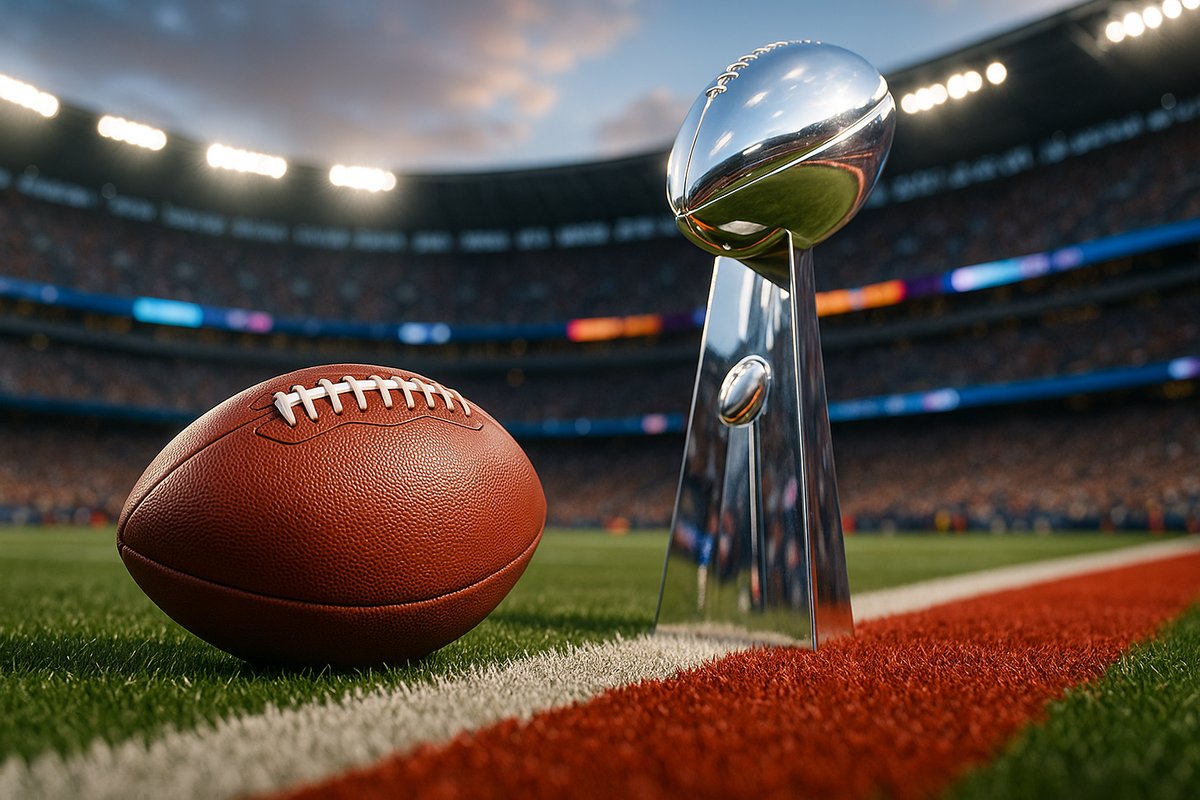
The Super Bowl hardware sits in a league of its own, a sterling silver reminder of what separates champions from the rest after grinding through a full season and postseason. When you’ve lined up in a defensive scheme, you understand exactly why that 22-inch football on its base carries the weight it does—it’s not just metal, it’s the payoff for gap discipline, coverage execution, and the kind of physicality that turns games.
Back in 1967 the thing started as the AFL-NFL World Championship Trophy after the Packers took down the Chiefs in Super Bowl I. They renamed it the Vince Lombardi Trophy in 1970 once the legend passed, and Tiffany & Co. kept building it the same way ever since: regulation-size football on a pyramidal base, about 6.5 pounds of silver. Those first Green Bay squads under Lombardi showed what disciplined defense plus offensive firepower could do, and I’ve studied enough film to know that blueprint still shows up in how modern defenses try to close lanes and force turnovers.
The design hasn’t changed much, but the engraving got sharper over time so every winner’s name, score, and date sits clean on the base. Pittsburgh’s six and Dallas’s five mean multiple replicas live in their halls of fame, and you can see the pride when players like Terry Bradshaw or Troy Aikman talk about the moment they raised it. That hardware cements legacies while the league keeps tracking every passing yard, sack, and MVP performance.
Beyond the physical piece, the trophy stands for the full grind—a 17-game regular season plus playoffs where one well-timed rush attack or game-winning drive can flip everything. The football on top is the heart of it all, and the silver still feels pure. I’ve watched enough tape on the Ravens and Buccaneers to know how their coverage schemes and gap discipline turned into trophies, the same way underdog runs like the Giants over the Patriots or Brady-era dynasties keep rewriting what’s possible. Draft prospects pay attention too; winning organizations tend to attract the kind of talent that wants to keep building on that foundation.
The Vince Lombardi Trophy has gone out 58 times now, most recently to the Chiefs in Super Bowl LVIII. Only 14 franchises have multiple, with the Patriots at six. Each one takes roughly four months for Tiffany artisans to finish by hand. Quarterbacks have taken home MVP honors 30 times. Material value sits above $25,000, but the real worth shows up when every player and coach on the roster gets a replica—over 100 per team lately.
The symbolism behind the trophy extends far beyond its physical appearance. Vince Lombardi himself embodied the values that the trophy now represents: excellence, perseverance, and unwavering commitment to fundamental football. His legendary quote, “Perfection is not just an aspiration, it’s an attitude,” captures the essence of what it takes to win a Super Bowl in the modern era. Teams that hoist the Lombardi Trophy typically share those same characteristics—they don’t beat themselves with penalties, they execute their game plan with precision, and they find ways to win games when momentum shifts late.
When you trace the evolution of the trophy’s significance, it mirrors the evolution of the league itself. The first Super Bowls were primarily defined by the AFL-NFL merger struggle, with each conference fighting for legitimacy. The Packers’ dominance in the first two Super Bowls validated Lombardi’s coaching philosophy and established a standard that franchises have chased ever since. By the time the Steelers dynasty rolled around in the 1970s, the trophy had become the ultimate symbol of a complete team—one that could dominate on both sides of the ball with a physical, suffocating defense and a balanced offensive attack.
The trophy’s craftsmanship deserves deeper appreciation too. Tiffany & Co. didn’t just agree to make a trophy; they committed to creating a masterpiece that would represent the pinnacle of professional football achievement. Each artisan hand-finishing the trophy brings decades of expertise to ensure the sterling silver gleams with perfection. The base isn’t just a simple platform—it features detailed workmanship that makes room for champion engraving. When you look at a Lombardi Trophy from the 1980s compared to one from today, the quality refinements are visible, yet the core design remains respectfully unchanged out of deference to Lombardi’s legacy.
Franchises handle the trophy with specific protocols. The winning team gets exclusive custody for a designated period before it returns to the Pro Football Hall of Fame for safekeeping. Players often request photos with the trophy, and some teams create iconic moments by bringing it into their home stadiums for celebration events. The physical act of lifting the trophy has become one of football’s most photographed moments—team captains, head coaches, and star players taking turns holding hardware that represents a full year’s work distilled into one championship game.
The financial investment in the trophy also reflects the stakes involved in professional football. At $25,000 per trophy, the league spends significant resources ensuring that only the finest materials and craftsmanship go into each piece. But when you consider the revenue that a Super Bowl championship generates—not just in playoff payouts but in long-term merchandise sales, sponsorship extensions, and franchise valuation increases—the trophy’s cost becomes almost negligible. A Super Bowl victory can add hundreds of millions to a franchise’s value, making that trophy one of the most financially consequential pieces of sports equipment ever created.
The replica trophies distributed to players and staff have become collectible items in their own right. Players display them in their homes, and when a Hall of Famer puts their Super Bowl replica up for auction, it often commands significant bids from collectors. These replicas allow the entire organization—from the star quarterback to the scout who identified a crucial draft pick—to own a tangible piece of their championship. It’s a democratic approach to honoring collective achievement, recognizing that Super Bowl championships are built by 53-man rosters plus coaching staffs working in concert.
At the end of the day it keeps pushing the league forward, reminding everybody that the next great scheme, the next draft class, and the next physical stand in the trenches all point toward lifting that same piece of silver. Every offseason, 32 teams reset with one goal: to position themselves to raise that trophy. The Vince Lombardi Trophy stands as professional football’s most iconic symbol—not because of what it’s made of, but because of what it represents.