
Top 10 NFL Running Backs All Time
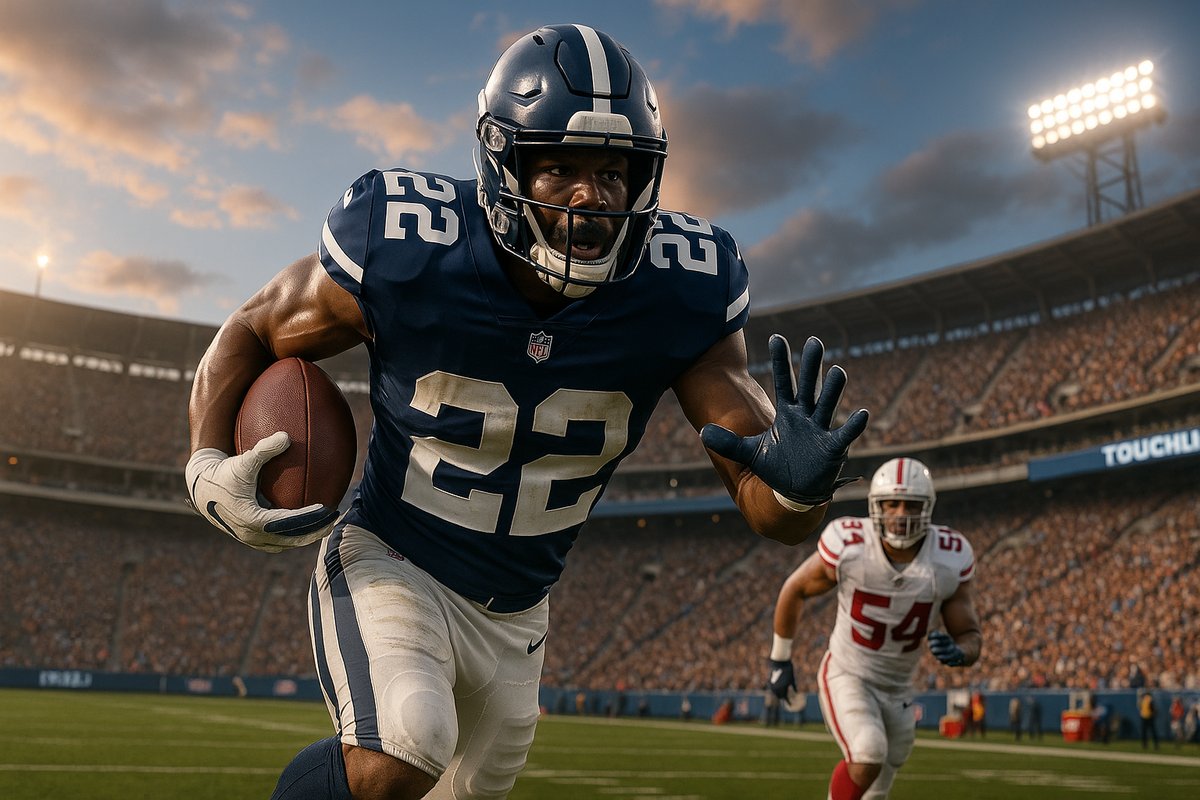
When you line up as a linebacker and study the tape on the greatest running backs ever, you start to see what separates the legends from the rest: it’s that combination of vision, power, and the ability to make defenders miss in tight spaces. Breaking down the top 10 NFL running backs all time takes you through eras where these guys controlled the game on the ground, racked up yards, scored touchdowns, and helped teams win it all. From early days with limited passing attacks to today’s complex schemes, their physical tools and smarts set the standard.
I’ve studied enough film to know that ranking these backs means looking at total rushing yards, touchdowns, yards per carry, Pro Bowls, MVPs, playoff impact, and how they elevated their teams across different eras. Longevity and clutch performances matter too, because when you’ve faced that kind of talent, you understand how durability and leadership turn good units into championship ones.
Kicking off at number 10 is Adrian Peterson, whose 2012 comeback after major knee surgery still stands out—he piled up over 2,000 rushing yards that season with pure determination. Gale Sayers sits at number 9, the Kansas Comet whose explosive cuts and highlight runs in the 1960s showed grace under pressure even with a career cut short. At number 8, Earl Campbell brought that punishing power to the Houston Oilers, wearing down defenses for multiple rushing titles with his bruising style. Number 7 is Marshall Faulk, the dual-threat back who changed the position in the Greatest Show on Turf offense with the Rams and helped them win a Super Bowl. LaDainian Tomlinson closes this group at number 6, a complete back who set touchdown records with the Chargers by blending receiving skills with rushing dominance and earning league MVP.
Eric Dickerson takes the number 5 spot with his record 2,105 rushing yards in 1984, a single-season mark that still holds thanks to his long-striding speed. O.J. Simpson at number 4 became the first to crack 2,000 rushing yards in 1973, turning the Bills into contenders with his open-field elusiveness. Barry Sanders lands at number 3 for that unmatched vision and ability to make defenders miss from every angle during his Lions days, topping 15,000 career yards even behind average lines. Walter Payton at number 2 showed toughness and consistency with the Bears, rushing for over 16,000 yards and leading them to the 1985 Super Bowl with all-around excellence. Jim Brown tops the list as the clear greatest, dominating the 1950s and 1960s with Cleveland through unmatched power and yards-per-carry averages that no one has touched, retiring early but leaving a lasting mark.
When you’ve lined up in a defensive scheme, you understand why Jim Brown averaged 5.2 yards per carry over his career, the highest mark among these volume leaders. Walter Payton owns the Bears’ single-game rushing record with 275 yards against the Vikings. Barry Sanders led the league in rushing four times without ever reaching a Super Bowl. Emmitt Smith, often mentioned in these talks, sits as the all-time leading rusher with 18,355 yards and three Super Bowl rings. LaDainian Tomlinson scored a record 31 touchdowns in 2006, mixing 28 rushing and three receiving. Adrian Peterson’s 2,097 yards in 2012 came right after ACL surgery, highlighting modern resilience. Eric Dickerson’s single-season mark has lasted nearly 40 years because today’s defenses emphasize better gap discipline. Marshall Faulk won Super Bowl XXXIV with the Rams and took home MVP in 2000. Gale Sayers scored 22 touchdowns as a rookie in 1965. Earl Campbell claimed three straight rushing titles to start his career and earned Offensive Player of the Year honors multiple times.
The evaluation of running backs across different eras requires understanding how the game itself has transformed. In Jim Brown’s era during the 1950s and early 1960s, defenses were simpler, but the physical toll was severe—players played both ways, and tackling technique was far more brutal without modern equipment standards. Brown’s dominance against those defenses, combined with his size and athleticism, makes his achievements even more impressive when you consider he competed against Hall of Famers like Dick “Night Train” Lane and Sam Huff on every snap. His decision to retire at age 29 while still in his prime, rather than endure further punishment, speaks to his intelligence and foresight about long-term health.
Barry Sanders’ career trajectory tells a different story about excellence and timing. Playing most of his career with the Detroit Lions, an organization that struggled to build championship rosters around him, Sanders still managed to accumulate 15,269 rushing yards and 110 touchdowns before his shocking retirement at age 30 in 1999. His ability to bounce off defenders and create plays from nothing—what scouts call “making something from nothing”—remains unmatched. Watching film of Sanders, you see him moving laterally in the backfield with a kind of otherworldly vision that allowed him to turn negative plays into gains and broken plays into touchdowns. He won the rushing title four times and led the league in yards per attempt multiple times, suggesting his production was efficient as well as voluminous.
Walter Payton’s legacy extends well beyond his on-field statistics. The “Sweetness” earned his nickname through his smooth running style, but his real impact came through his consistency and versatility. Payton rushed for over 1,000 yards in a season eight times, demonstrating remarkable durability over his 13-year career with the Bears. Beyond rushing, he threw 110 touchdown passes on trick plays, caught 492 passes, and played with an intensity on every single snap regardless of game situation. His willingness to block defensive ends and outside linebackers was uncommon for elite running backs of his era, and that all-around play made the Bears’ offense more efficient than statistics alone suggest. The NFL’s Man of the Year Award, now bearing his name, reflects how he carried himself off the field as much as on it.
Eric Dickerson’s 1984 season remains one of the most dominant single-season performances in NFL history. Carrying the ball 379 times for those 2,105 yards, Dickerson averaged 5.6 yards per carry while playing for a Rams team that ranked eighth in total offense that year. His long, powerful stride allowed him to hit holes at full speed and turn corner efficiently, gaining yardage that more compact backs would struggle to achieve. Even though the Rams’ passing game was limited that season, they couldn’t stack eight defenders in the box because Dickerson’s threat was so severe. That season changed perceptions about what was possible at the running back position and set a standard for consecutive carries and volume that influenced how teams built their offenses for decades.
LaDainian Tomlinson revolutionized the position by proving that elite receiving skills and rushing prowess could coexist at the highest level. His 2006 season—31 total touchdowns with the San Diego Chargers—came during an era when defenses were becoming increasingly complex with multiple safety coverages and blitz packages. The fact that Tomlinson could line up as a receiver, line him up in the slot, or use him in traditional rushing situations made the Chargers’ offense nearly impossible to defend. Over his career, he caught 624 passes, making him one of the most complete backs ever to play the position. His ability to catch the football in stride and turn upfield quickly gave defenses fits, especially when game scripts forced them to respect both the run and pass equally.
Gale Sayers’ career was tragically cut short by knee injuries, but his rookie season in 1965 remains one of the most electrifying starts to a professional football career. Scoring 22 touchdowns as a rookie—14 rushing, 6 receiving, and 2 on returns—Sayers announced himself as a generational talent immediately. His film shows a back with exceptional lateral agility and an instinctive feel for pursuing defenders. Despite playing only seven seasons due to injuries, Sayers still accumulated 4,956 rushing yards and 30 total touchdowns, enough to earn Hall of Fame induction based on the quality and impact of his brief career. The “Kansas Comet” nickname stuck because his ability to create explosive plays seemed to come from nowhere—he’d catch a handoff and seemingly teleport to the secondary.
These top 10 NFL running backs all time show how the position has evolved