
Jerry Rice Record Breaking Receiving Achievements
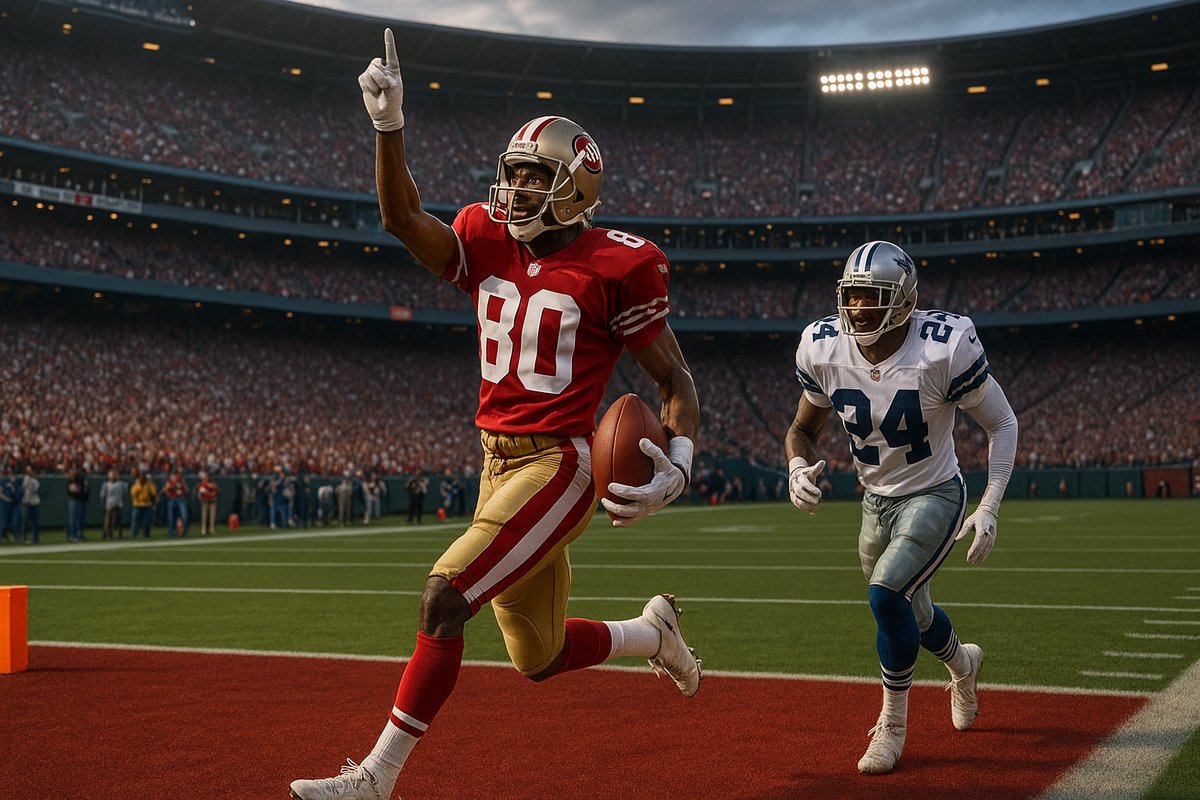
Jerry Rice didn’t just set records at wideout—he redefined what it meant to dominate from the slot to the boundary for two decades. When you’ve lined up in a defensive scheme trying to contain a guy like that, you understand how his combination of route precision and physical toughness forced coordinators to burn extra resources just to keep him in front of them. His numbers still stand as the gold standard, and I’ve studied enough film to know why no one has come close to matching that consistency across 20 seasons.
Coming out of Mississippi Valley State, Rice flashed the kind of small-school dominance that made scouts take notice even back in 1985. The 49ers grabbed him in the first round, and under Bill Walsh he slid right into the West Coast offense. His rookie year—49 catches for 927 yards—showed early signs of that elite footwork and yards-after-catch burst. By year three he was already rewriting the franchise books, stretching defenses vertically while connecting with Joe Montana in ways that made coverage shells look silly.
Early on he had to bulk up and sharpen his hands against physical corners who tried to jam him at the line. Rice answered with that obsessive offseason grind, turning himself into a technician who could win with subtle head fakes and sudden acceleration. Those first few years turned a promising rookie into the perennial Pro Bowler we all remember.
Through the 1990s he piled up production that still feels impossible. Leading the league in receiving yards six times and touchdowns four times, he posted a 1987 season with 22 scores in just 12 games—red-zone dominance that made gap discipline irrelevant once he got a step. Career totals of 1,549 receptions, 22,895 yards, and 197 touchdowns remain untouched because he rarely missed time, playing 303 games and only sitting out a dozen across that entire run. Advanced numbers back it up: Rice generated more expected points per target than his peers thanks to elite yards per route run and a contested-catch rate that made single coverage a losing proposition.
What separated Rice from other prolific receivers wasn’t just volume—it was efficiency and consistency. His touchdown-to-reception ratio of 12.7 percent demonstrates how often he made plays in the most valuable areas of the field. He hit the 1,000-yard receiving season mark 14 times, a feat that puts into perspective just how relentlessly productive he was. Even in years when the 49ers’ offensive system shifted or when he joined Oakland and Seattle later in his career, Rice maintained elite production levels. That sustained excellence across different offenses, quarterbacks, and defensive eras is what truly sets his legacy apart.
The West Coast offense under Bill Walsh was tailor-made for Rice’s skill set, but it’s crucial to understand that Rice didn’t merely benefit from the system—he perfected it and made it his own. His crisp route-running, refined footwork, and ability to separate at the break point turned every play into a potential completion and scoring opportunity. The system gave him the platform, but his execution elevated it to unprecedented levels. When he later joined the Raiders and Seahawks, he proved he could excel in different offensive concepts, catching passes from Jeff George and Matt Hasselbeck with the same precision he’d shown with Montana and Steve Young.
His postseason impact matched the regular-season dominance. Three Super Bowl rings with San Francisco included that Super Bowl XXIII MVP performance—11 catches for 215 yards that set up the game-winner. He added another ring with Tampa Bay in 2002, showing he could still contribute deep into his 30s. Defenses had to roll extra help his way, which opened things up for teammates and forced coverage adjustments that modern analysts still reference when breaking down how to handle a true alpha receiver. In Super Bowl XXIV, Rice caught 11 passes for 148 yards and a touchdown, cementing his status as the most dangerous postseason performer at his position.
The consistency factor cannot be overstated. Rice averaged 75.9 receptions per season across his 20-year career—a mark that represents sustained elite performance unmatched in NFL history. His lowest season totals came late in his career when he was in his late 30s, yet he still managed double-digit touchdown seasons well into his fourth decade. That durability, combined with his technical excellence, made him the blueprint every young receiver studies. His ability to stay healthy, avoid serious injuries, and maintain peak performance through different eras of the NFL speaks to both his physical talent and his mental approach to the game.
Rice’s impact on teammate performance cannot be overlooked either. The attention defenses paid to him created easier matchups for whoever lined up alongside him. Roger Craig, John Taylor, and later Tim Brown all benefited from the coverage leverage Rice commanded. Quarterbacks trusted him in critical moments—his hands rarely betrayed him, and his route precision meant they knew exactly where to place the ball. That reliability is why winning teams always need someone who can convert catchable balls into production, and Rice was the gold standard.
His training regimen became legendary, influencing how modern receivers prepare for the season. Rice’s commitment to footwork drills, blocking assignments, and maintaining his weight helped establish the professional standard for elite receivers today. Younger players point to his work ethic as the template for longevity at the position. His combination of physical gifts and mental discipline proved that great receivers aren’t just born—they’re built through obsessive attention to detail.
Key benchmarks tell the story:
– 22,895 career receiving yards, the all-time mark.
– 197 receiving touchdowns, another record that feels unbreakable.
– 1,549 receptions over 303 regular-season games.
– Three Super Bowl titles with the 49ers plus one more in Tampa.
– 22 touchdown receptions in 12 games during 1987.
– 13 Pro Bowls and 10 First-Team All-Pro nods.
– Super Bowl XXIII MVP with 215 yards.
– Stops with the 49ers, Raiders, and Seahawks.
– Hall of Fame induction in 2010.
– Still owns a stack of 49ers franchise records.
– 14 seasons with 1,000+ receiving yards.
– Over 100 career receiving touchdowns before age 30.
Rice’s film remains required viewing for any draft prospect hoping to last at the position. His route tempo, body control at the catch point, and ability to stay productive late in his career set the bar every elite wideout gets measured against today. When scouts evaluate wide receivers in the modern era, Rice’s name inevitably comes up in conversations about standards and ceilings. Can this prospect run routes like Rice? Can he separate the way Rice did? Can he maintain production into his late 30s like Rice? These questions persist because his benchmark remains the ultimate measuring stick nearly a quarter-century after his Hall of Fame induction.