
Best NFL Running Back Duos in History
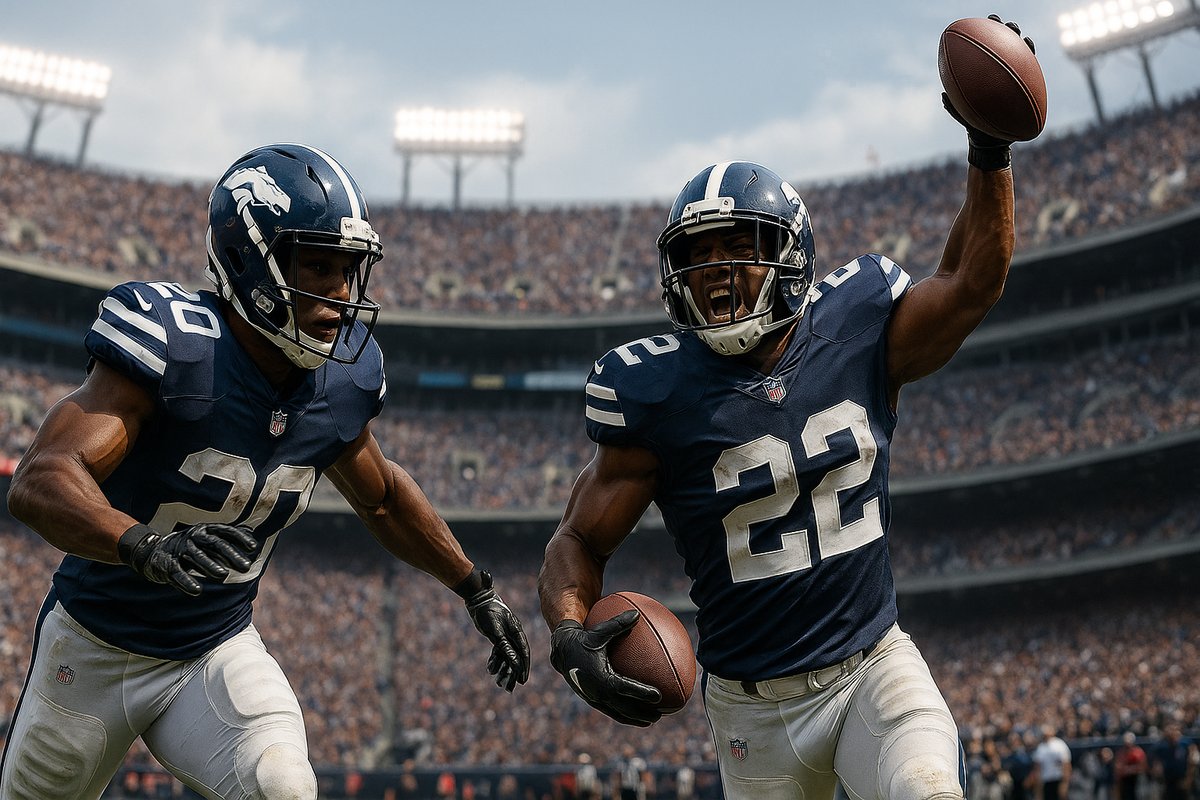
The best running back duos in NFL history weren’t accidents—they were products of sharp front-office decisions, complementary skill sets, and, in many cases, the kind of contract structures that let teams keep both backs without blowing up their cap. These pairings controlled games, set records, and delivered championships for the Steelers, Dolphins, and 49ers, blending power, speed, and later, receiving threats that stretched defenses. From the 1970s run-heavy era to today’s spread offenses, the smartest franchises knew when to rotate, when to feature, and when to let one back’s contract expire while extending the other.
In the 1970s, physical duos thrived under run-first philosophies that maximized offensive line investments. The Dolphins’ Larry Csonka and Mercury Morris formed a textbook example: Csonka’s bruising style delivered short-yardage reliability and wore down fronts, while Morris brought the home-run speed that produced a 1,000-yard season in 1972. Their rotation under Don Shula created constant mismatches, powering the only perfect season and a Super Bowl VII title with averages exceeding 180 rushing yards per game. What the front office was really thinking here was roster flexibility—Csonka’s veteran presence anchored the room while Morris’s speed kept defenses honest without needing massive second contracts for both. The Dolphins’ ground game averaged 4.9 yards per carry during their perfect 1972 season, a mark rarely matched in modern football, proving that complementary backs could dominate without individual superstars hogging touches and salary cap space.
The Steelers’ Franco Harris and Rocky Bleier mirrored that blueprint in Pittsburgh. Harris’s vision and balance netted 12,120 rushing yards and four rings, while Bleier’s post-injury grit added 3,865 yards and unmatched toughness. Their peak seasons topped 2,000 combined rushing yards, and they combined for over 200 in key Super Bowl wins. From a franchise perspective, Bleier’s lower-cost veteran deal let Pittsburgh allocate elsewhere on the Steel Curtain defense, proving these duos succeed when one back’s contract doesn’t handcuff the cap. In Super Bowl IX, Harris alone rushed for 158 yards and a touchdown, showcasing how Pittsburgh’s running philosophy could dominate elite defensive fronts when both backs shared carries and kept the other fresh for critical moments.
By the 1980s and 1990s, versatility became the differentiator. The 49ers’ Roger Craig and Wendell Tyler thrived in Bill Walsh’s West Coast system, with Craig becoming the first back to hit 1,000 rushing and 1,000 receiving in 1985. Tyler’s explosiveness complemented that, averaging 150 combined scrimmage yards in playoffs en route to three titles. What the front office was really thinking here was schematic fit—Craig’s receiving ability justified his extension because it opened the field for Joe Montana without extra draft capital at skill positions. Craig’s dual-threat profile made him virtually impossible to game-plan against; defenses that stacked the box to stop his rushing suffered in coverage, while safeties cheating up to cover his receiving routes opened lanes for Montana’s play-action bootlegs. This synergy became the blueprint for modern offenses seeking dual-threat backs.
Dallas leaned on Emmitt Smith and Daryl Johnston for similar reasons. Smith’s record 18,355 rushing yards came behind Johnston’s lead blocking and short-yardage receiving (over 1,000 career receiving yards), fueling four Super Bowl trips. Johnston’s fullback versatility let the Cowboys extend Smith without overpaying for a pure blocker, a contract-savvy move that kept the offense balanced across multiple championship windows. The Smith-Johnston pairing was particularly lethal in the postseason, where Smith’s 1,773 career playoff rushing yards showcased how a true three-down back paired with an elite lead blocker could impose their will in win-or-go-home scenarios. Johnston’s willingness to lead-block rather than chase receiving statistics created space for Smith to accumulate those historic totals.
The Kansas City Chiefs’ Priest Holmes and Larry Johnson provided another compelling modern example of staggered star power. Holmes established himself as a top-five back in the early 2000s before injuries shortened his window, allowing Johnson to take over seamlessly. Johnson rushed for 1,789 yards in 2005 and carried the team into the playoffs, demonstrating how front offices could manage the transition between elite backs through smart roster construction. Neither back felt slighted because the organization had a clear succession plan, avoiding the locker room tension that can derail teams when two stars compete for touches.
In the modern era, receiving threats and pass-catching backs redefined the position. The Saints’ Mark Ingram and Alvin Kamara paired Ingram’s between-the-tackles power (over 5,000 rushing yards) with Kamara’s elusiveness (more than 3,000 receiving yards), creating multiple 1,000-yard rushing seasons from 2017-2019 and sustained NFC contention. From a fantasy perspective, that chemistry made both backs weekly starters in PPR formats while the Saints used Ingram’s veteran deal as a bridge before Kamara’s extension. Similarly, Seattle’s Marshawn Lynch and Robert Turbin powered the run game that set up Russell Wilson’s play-action, with Lynch’s 9,385 yards including Super Bowl XLVIII clock control. What the front office was really thinking here was defensive synergy—Lynch’s physical style fatigued opponents, letting the Legion of Boom rest, all without two massive running back salaries colliding.
New England’s Corey Dillon and Kevin Faulk represented another successful modern pairing, with Dillon providing sledgehammer carries and Faulk excelling in the pass game and on third downs. Their 2004 season saw Dillon rush for 1,635 yards while Faulk added over 1,000 total yards, creating offensive balance that helped the Patriots win their second Super Bowl. The Dillon-Faulk combination also showed how experience mattered; Dillon’s arrival in New England, after years of underachievement in Cincinnati, suddenly unlocked his potential because he fit into a system designed for him, proving that context and offensive philosophy determine whether a back becomes a star or stays overlooked.
Green Bay’s Aaron Jones and A.J. Dillon provided recent evidence that the dual-back approach remains viable in today’s pass-heavy NFL. Despite operating in an offense designed around Aaron Rodgers’ arm, the Packers consistently gave both backs meaningful carries (1,100+ combined rushing yards in multiple seasons), using the ground game to control clock and setup play-action passes. Their ability to sustain drives without depending entirely on vertical passing protected Rodgers from excessive pressure while keeping defenses from committing fully to the pass rush.
Key facts underscore the impact: Csonka-Morris topped 2,500 combined rushing yards in 1972; Harris and Bleier averaged 220 combined rushing yards in championship games; Craig’s 1985 milestone stood alone; Smith and Johnston exceeded 15,000 combined scrimmage yards in Dallas; and Kamara-Ingram averaged 2,800 combined scrimmage yards at their peak. Elite duos historically posted 4.8 yards per carry in Super Bowls while delivering 8-12 seasons of stability that protected franchise timelines. These pairings show that ground games still matter when contracts and rotations are managed with championship intent.
The economics of maintaining two-back systems have shifted dramatically with salary-cap constraints and the NFL’s evolution toward vertical passing games, yet teams that invest strategically in complementary backs still reap rewards in playoff football, where physical running games control tempo and protect defenses. The key is identifying backs with genuinely different skill sets—not two similar talents competing for the same role—and structuring contracts so that one back’s extension doesn’t prevent the other’s development or create resentment in the locker room. History shows that championship teams understand this balance perfectly.